Open a wellness bestseller or scroll through the carnivore corner of social media and you will find the same message: plants are trying to hurt you. Lectins, oxalates, phytates, and goitrogens are routinely described as toxins, designed by nature to punish anyone who eats beans, spinach, or a handful of almonds.
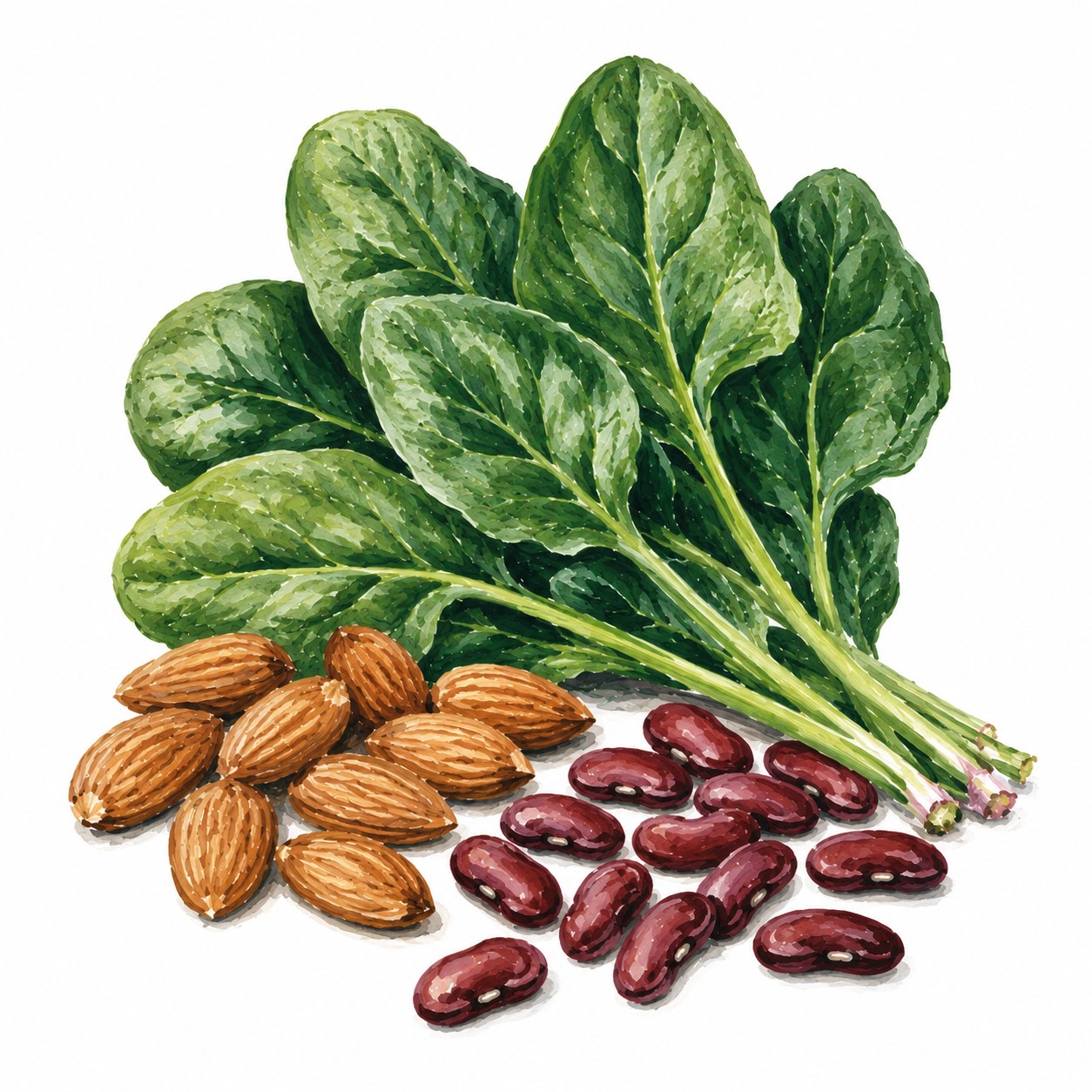
Supplements that promise to neutralise these compounds sell well. Entire diets have been built around avoiding them. The evidence, however, suggests that these compounds are far less harmful, and often far more beneficial, than their reputation suggests.
What are anti-nutrients?
The term “anti-nutrient” covers a loose group of naturally occurring plant compounds, including lectins, oxalates, phytates, goitrogens, phytoestrogens, and tannins, that can interfere with the digestion or absorption of certain nutrients (Petroski & Minich, 2020). Plants produce many of these substances as part of their own defence systems, protecting seeds and leaves from insects, fungi, and grazing animals. It is true that, in laboratory and animal studies, some of these compounds can bind minerals or irritate gut tissue at high concentrations. The question that actually matters for anyone deciding what to eat is whether the amounts found in a normal, varied diet cause meaningful harm. On the whole, they do not.
Lectins: more famous than dangerous
Lectins have had the most dramatic reputational journey, largely thanks to popular diet books that describe them as a hidden cause of inflammation, weight gain, and autoimmune disease. A narrative review examining the evidence behind these claims found that, while a small proportion of people show measurable immune reactivity to certain lectins, there is very limited human research linking typical dietary lectin intake to disease (Vojdani, 2015). Harvard’s Nutrition Source goes further, noting that legumes, whole grains, and nuts, the very foods most often blamed for their lectin content, are consistently associated with lower rates of cardiovascular disease and type 2 diabetes across large population studies, and concluding that their benefits far outweigh any theoretical harm from lectins (Harvard T.H. Chan School of Public Health, 2025). A 2026 European Food Safety Authority risk assessment did confirm a genuine hazard, but a narrow one: inadequately cooked kidney beans, which contain high levels of the lectin phytohaemagglutinin, can cause acute gastrointestinal illness (EFSA, 2026). This is a well-established reason to cook your beans properly, not a reason to fear vegetables in general.
When anti-nutrients really matter: the real effects of oxalates, phytates, and goitrogens
Oxalates, found in foods such as spinach and rhubarb, can bind calcium and contribute to kidney stone formation in people who are already prone to them. Phytates, concentrated in the outer layers of grains, seeds, and legumes, can reduce the absorption of iron, zinc, and calcium from the same meal. Goitrogens, found in cruciferous vegetables, can interfere with iodine uptake by the thyroid. A review compiling the evidence on all three compounds concluded that their effects depend heavily on the food matrix, preparation method, and individual health status, and that some of these same compounds show beneficial effects, such as antioxidant activity, in other contexts (Petroski & Minich, 2020). The people who genuinely need to pay attention are narrow groups: those with a history of calcium-oxalate kidney stones, those with existing thyroid disease consuming very large amounts of raw cruciferous vegetables, and populations where a single plant food such as unleavened grain forms the bulk of the entire diet, a scenario common in some food-insecure regions but not in a typical varied Western diet. For almost everyone else, standard preparation methods such as soaking, boiling, and fermenting substantially reduce these compounds, and dietary variety does the rest by preventing any single anti-nutrient from dominating the diet (Petroski & Minich, 2020).
How a food is prepared matters here too, not just how much of it you eat. A systematic review of brassica vegetables and thyroid function placed particular emphasis on whether vegetables were eaten raw or processed, identifying this as one of the key factors shaping study outcomes, and concluded that including brassica vegetables in the daily diet, alongside adequate iodine intake, does not adversely affect thyroid function (Galanty et al., 2024). Cooking is part of the reason. A review focused specifically on lectins, goitrogens, phytates, and oxalates reported that five minutes of boiling reduces total glucosinolate content by around half, and concluded more broadly that these compounds tend to cause harm mainly when consumed unprocessed or in isolation, whereas within a normal diet and after culinary treatment such as cooking, fermenting, or milling, their effects are greatly reduced, and some may even become beneficial (López-Moreno et al., 2022).
What happens in the real world?
While the anti-nutrient narrative rests largely on laboratory extrapolation, the evidence on actual health outcomes in real populations is extensive and consistent. A meta-analysis of prospective cohort studies covering nearly 700,000 participants found that greater adherence to plant-based dietary patterns was associated with a lower risk of cardiovascular disease and coronary heart disease (Gan et al., 2021). A separate meta-analysis of over 500,000 participants found that plant-based diets were associated with reduced all-cause and coronary heart disease mortality (Jafari et al., 2022). A third meta-analysis covering more than 400,000 participants reached a similar conclusion for cardiovascular mortality and incidence (Quek et al., 2021). None of these studies found that the anti-nutrient content of plant foods produced measurable population-level harm. If anti-nutrients were exerting the widespread harmful effects often claimed in popular diet books, we would expect those who eat the greatest quantities of plant foods to experience worse health outcomes. Instead, prospective cohort studies consistently find the opposite. People who eat more plants tend to live longer and have less cardiovascular and coronary heart disease, not more.
How nutrition scares spread
There is a recognisable pattern in how these fears spread. A compound with a genuine, narrow, dose-dependent effect in a specific population, kidney stone formers and oxalates, or people with limited dietary variety and phytates, gets generalised into a claim that the compound is dangerous for everyone, at any dose, in any context. This is a common distortion in nutrition science communication, and it is worth being aware of it, because the practical consequence of anti-nutrient panic is not a safer diet. It is a needlessly restricted one, at a time when most people already fall short of recommended fruit, vegetable, and legume intake.
Should we worry?
None of this means anti-nutrients are irrelevant. If you have a history of kidney stones, oxalate intake is worth discussing with a clinician. If you rely on a small number of unprocessed grains as your primary food source, mineral absorption is a genuine consideration. For most people eating a varied diet, standard cooking methods such as soaking, boiling, and fermenting already reduce anti-nutrient content substantially. The overwhelming weight of population-level evidence points toward more plant food, not less, as a driver of better health. Anti-nutrients are real, but so is context. For the vast majority of people, they are not a reason to fear beans, whole grains, nuts, or vegetables. If anything, worrying about anti-nutrients is more likely to reduce diet quality than improve it.
References
EFSA Panel on Contaminants in the Food Chain (CONTAM). (2026). Risks for human health related to the presence of plant lectins in food. EFSA Journal. https://doi.org/10.2903/j.efsa.2026.9850
Galanty, A., Grudzińska, M., Paździora, W., Słuźały, P., & Paśko, P. (2024). Do Brassica vegetables affect thyroid function? A comprehensive systematic review. International Journal of Molecular Sciences, 25(7), 3988. https://doi.org/10.3390/ijms25073988
Gan, Z. H., Cheong, H. C., Tu, Y. K., & Kuo, P. H. (2021). Association between plant-based dietary patterns and risk of cardiovascular disease: A systematic review and meta-analysis of prospective cohort studies. Nutrients, 13(11), 3952. https://doi.org/10.3390/nu13113952
Harvard T.H. Chan School of Public Health. (2025). Lectins. The Nutrition Source. https://nutritionsource.hsph.harvard.edu/anti-nutrients/lectins/
Jafari, S., Hezaveh, E., Jalilpiran, Y., Jayedi, A., Wong, A., Safaiyan, A., & Barzegar, A. (2022). Plant-based diets and risk of disease mortality: A systematic review and meta-analysis of cohort studies. Critical Reviews in Food Science and Nutrition, 62(28), 7760–7772. https://doi.org/10.1080/10408398.2021.1918628
López-Moreno, M., Garcés-Rimón, M., & Miguel, M. (2022). Antinutrients: Lectins, goitrogens, phytates and oxalates, friends or foe? Journal of Functional Foods, 89, 104938. https://doi.org/10.1016/j.jff.2022.104938
Petroski, W., & Minich, D. M. (2020). Is there such a thing as “anti-nutrients”? A narrative review of perceived problematic plant compounds. Nutrients, 12(10), 2929. https://doi.org/10.3390/nu12102929
Quek, J., Lim, G., Lim, W. H., Ng, C. H., So, W. Z., Toh, J., Pan, X. H., Chin, Y. H., Muthiah, M. D., Chan, S. P., Foo, R., Yip, J., Tan, H. C., Dimitriadis, G. K., Huang, D. Q., Chan, M., & Noureddin, M. (2021). The association of plant-based diet with cardiovascular disease and mortality: A meta-analysis and systematic review of prospective cohort studies. Frontiers in Cardiovascular Medicine, 8, 756810. https://doi.org/10.3389/fcvm.2021.756810
Vojdani, A. (2015). Lectins, agglutinins, and their roles in autoimmune reactivities. Alternative Therapies in Health and Medicine, 21(Suppl 1), 46–51.