Beneath the Surface
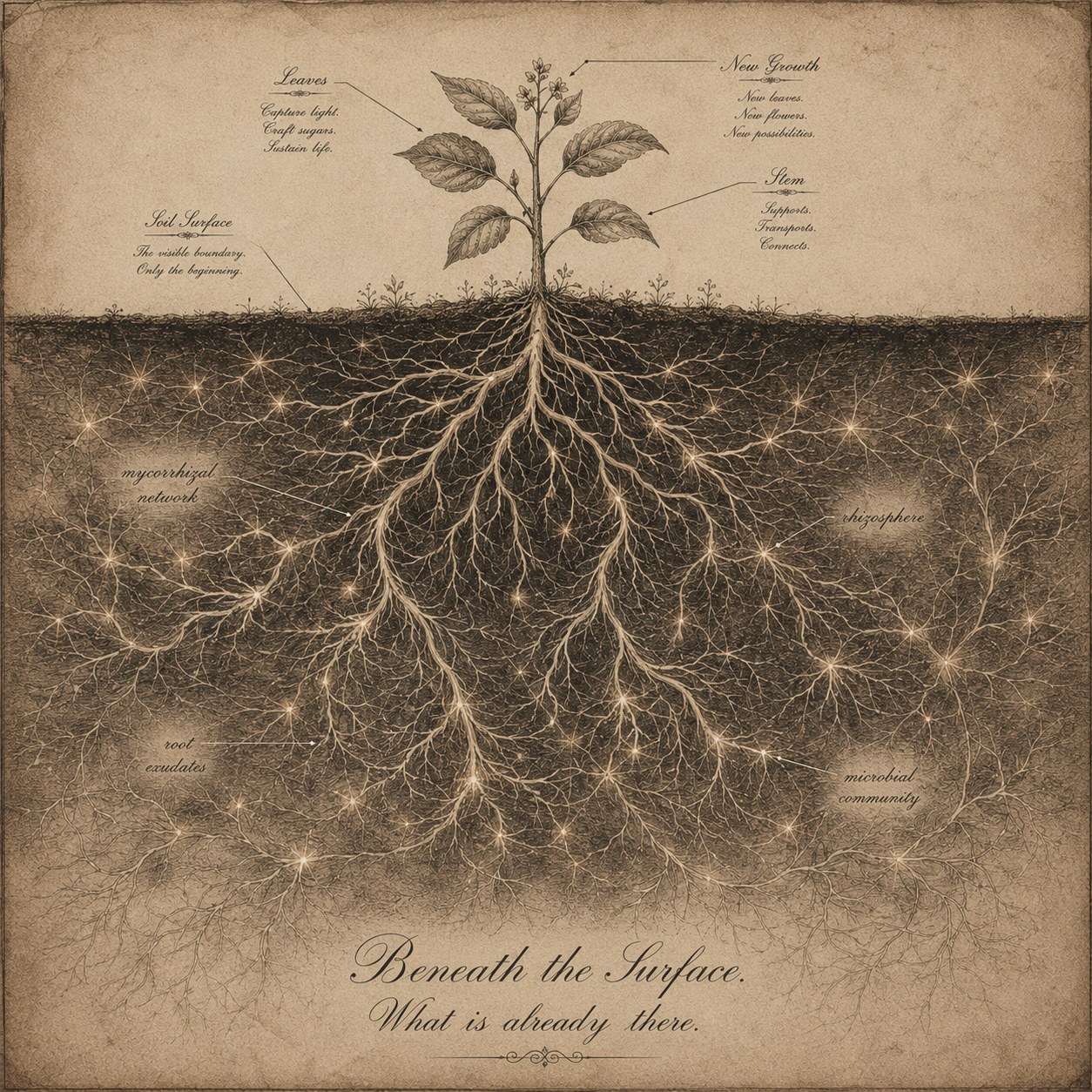
“Simplicity is the quiet revolution on your plate. Just vegetables and time, no need to complicate.”
The science behind the song
Fermenting a vegetable does more than preserve it. When lactic acid bacteria, naturally present on the surface of most fresh vegetables, are given salt, time and an anaerobic environment, they multiply and produce enzymes that break down the plant's cell walls. That process releases polyphenols and other compounds that were previously bound up in the plant's fibre matrix, and converts some of them into smaller, more easily absorbed forms.
Several studies now show that lactic acid fermentation increases the measurable bioavailability of polyphenols in vegetables, meaning more of the compound is available for absorption rather than passing through the gut unused. The bacteria involved, typically species of Lactobacillus, Leuconostoc, Pediococcus and Weissella, also produce beta-glucosidase enzymes that convert polyphenol glycosides into smaller aglycone forms, which appear to cross the intestinal lining more readily. Separately, lactic fermentation has been shown to improve the bioavailability of some minerals, including iron, likely by increasing the proportion present in a more absorbable form.
None of this makes fermented vegetables a substitute for dietary diversity or fibre more broadly; the research is about relative bioavailability of specific compounds, not a case for fermentation as a cure-all. But it is a reasonably well-evidenced mechanism, and it fits the song's wider point: that a lot of what gut microbes do for polyphenols is finish a job the plant's own cell structure started.
- Lactic acid fermentation
- A microbial process in which bacteria convert sugars in a food into lactic acid, lowering pH, preserving the food, and altering its chemical composition, including its polyphenol content.
- Bioavailability
- The proportion of a compound in food that is actually absorbed and available for the body to use, as opposed to the total amount present in the food itself.
References
Filannino, P., Di Cagno, R., & Gobbetti, M. (2018). Metabolic and functional paths of lactic acid bacteria in plant foods: Get out of the labyrinth. Current Opinion in Biotechnology, 49, 64–72.
Bhat, R. (2025). Dietary polyphenols, food processing and gut microbiome: Recent findings on bioavailability, bioactivity, and gut microbiome interplay. PMC. pmc.ncbi.nlm.nih.gov
Bering, S., et al. (2016). Increased iron bioavailability from lactic-fermented vegetables is likely an effect of promoting the formation of ferric iron (Fe³⁺). PMC. ncbi.nlm.nih.gov