Full of Beans
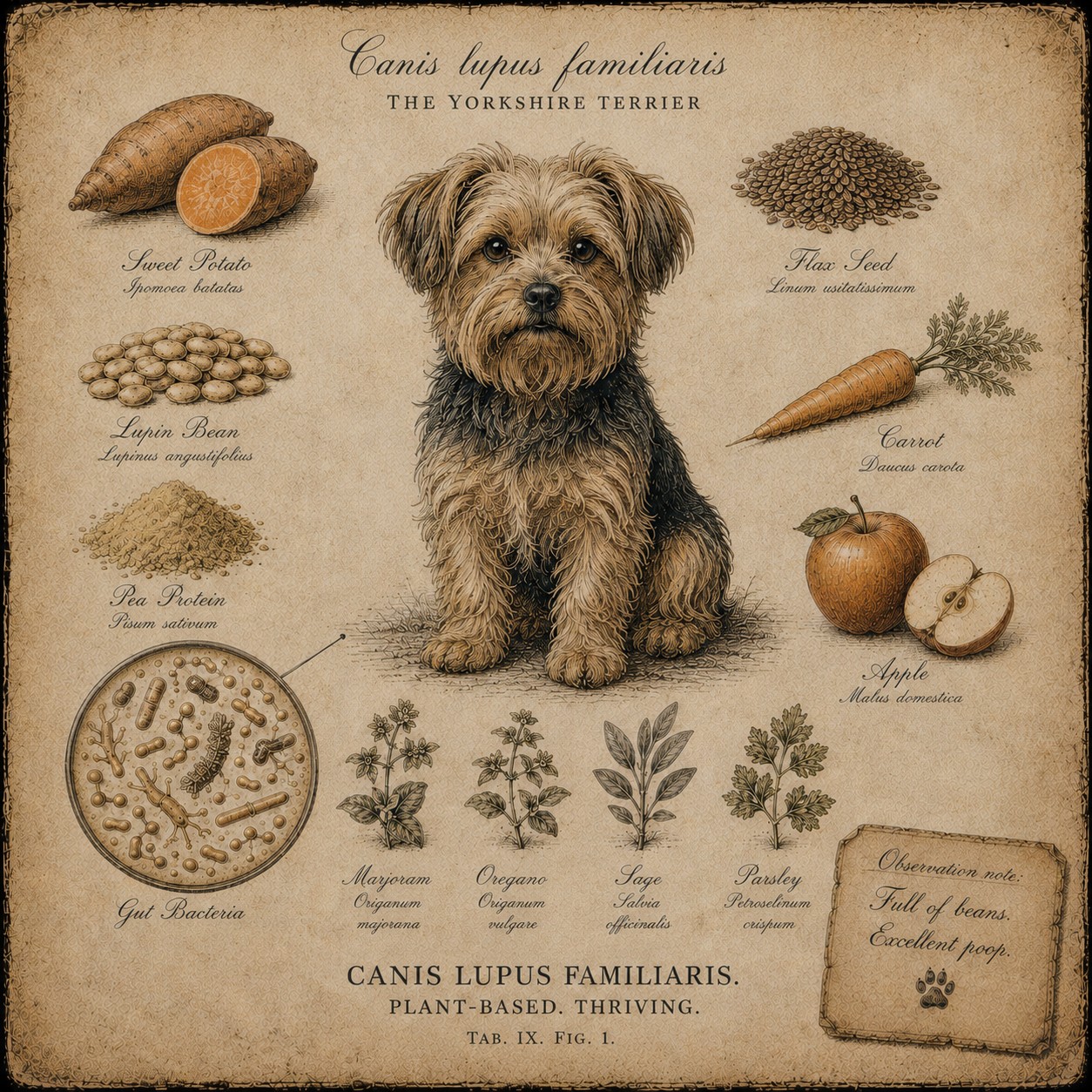
“Full of beans, full of beans, Beau is absolutely full of beans.”
The story behind the song
Beau, my Yorkshire Terrier, is a credited artist on this album, and this is his song. Before switching him to a plant-based diet, we did the research rather than just following instinct: looked at his breed history, his genetics, and what the evidence actually shows about dogs fed vegan diets. He now eats a vet-formulated plant-based food built around sweet potato, lupin beans, pea protein and flax seed, with prebiotic FOS, beta-glucans and a vegan DHA omega-3 source added to cover the nutrients a dog would otherwise get from meat. He has not complained. Well, he complains about most things. Just not about the food.
The evidence behind the diet
The largest study to date on this question, led by veterinary academic Andrew Knight and colleagues, surveyed 2,536 dogs fed conventional meat, raw meat, or vegan diets for at least a year. Dogs on vegan diets had the lowest rate of reported health disorders of the three groups, 36%, compared with 43% on raw meat and 49% on conventional meat diets. Across seven general indicators of illness, vegan-fed dogs showed 14 to 51% lower risk than conventionally fed dogs, and for six specific health disorders, the risk reduction was 50 to 61%. No health disorder was found to be more common in the vegan-fed dogs.
None of this means any plant-based food will do. The authors were clear that the benefit applies to nutritionally sound vegan diets, ones formulated to meet a dog’s full nutrient requirements rather than simply swapped for meat-free ingredients without checking the label. That distinction, vet-formulated and complete rather than improvised, is exactly what sits behind the sweet potato, lupin and pea protein on Beau’s bowl.
References
Knight, A., Huang, E., Rai, N., & Brown, H. (2022). Vegan versus meat-based dog food: Guardian-reported indicators of health. PLOS ONE, 17(4), e0265662. https://doi.org/10.1371/journal.pone.0265662