Fungi
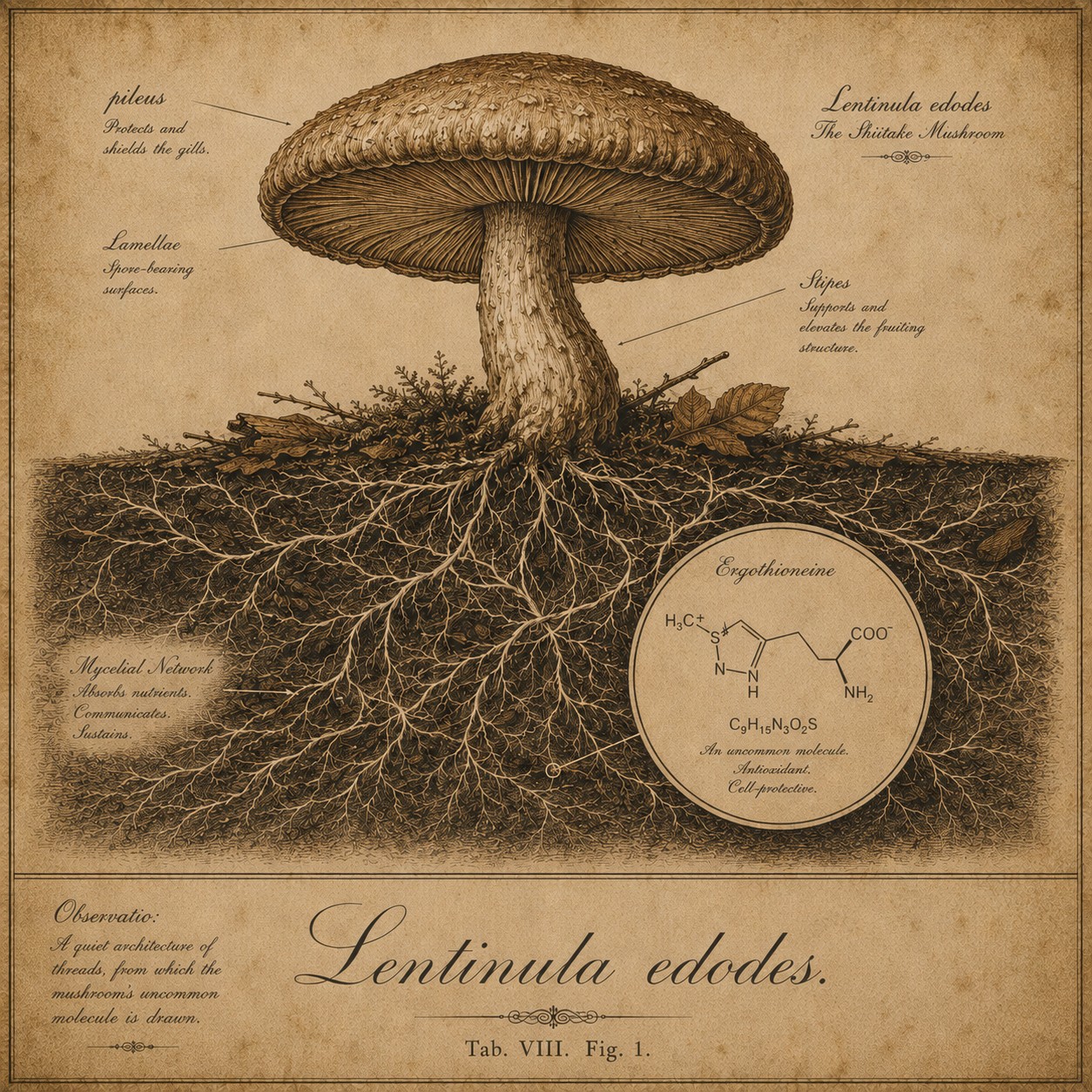
“Ergothioneine, remember the name, mushrooms make it, and they play a different game.”
The science behind the song
Ergothioneine is an unusual antioxidant: a sulphur-containing amino acid derivative synthesised only by certain fungi and bacteria, never by plants or animals. Mushrooms are its richest dietary source by a wide margin, with concentrations varying considerably by species. Despite being unable to make it themselves, humans have evolved a specific transporter, OCTN1 (also known as SLC22A4), whose job is to pull ergothioneine out of digested food and distribute it around the body, an unusual level of dedicated machinery for a compound that isn’t officially classed as an essential vitamin.
That dedicated transporter is part of why some researchers have proposed ergothioneine as a candidate “longevity vitamin”, a compound the body clearly values enough to actively conserve, even though it doesn’t meet the strict definition of a vitamin. Ergothioneine accumulates preferentially in tissues under oxidative stress, and lower blood levels have been associated in observational studies with markers of cognitive decline and cardiovascular risk, though this doesn’t yet establish that raising intake prevents those outcomes.
What is well established is the basic biology: this is a molecule the body cannot manufacture on its own, mushrooms are the most concentrated everyday source, and a dedicated transport system exists specifically to make the most of whatever dietary ergothioneine is available.
References
Halliwell, B., Cheah, I. K., & Tang, R. M. Y. (2018). Ergothioneine – a diet-derived antioxidant with therapeutic potential. FEBS Letters, 592(20), 3357–3366. https://doi.org/10.1002/1873-3468.13123
Cheah, I. K., & Halliwell, B. (2021). Could ergothioneine aid in the treatment of coronavirus patients? Antioxidants. pmc.ncbi.nlm.nih.gov