Garden in the Dark
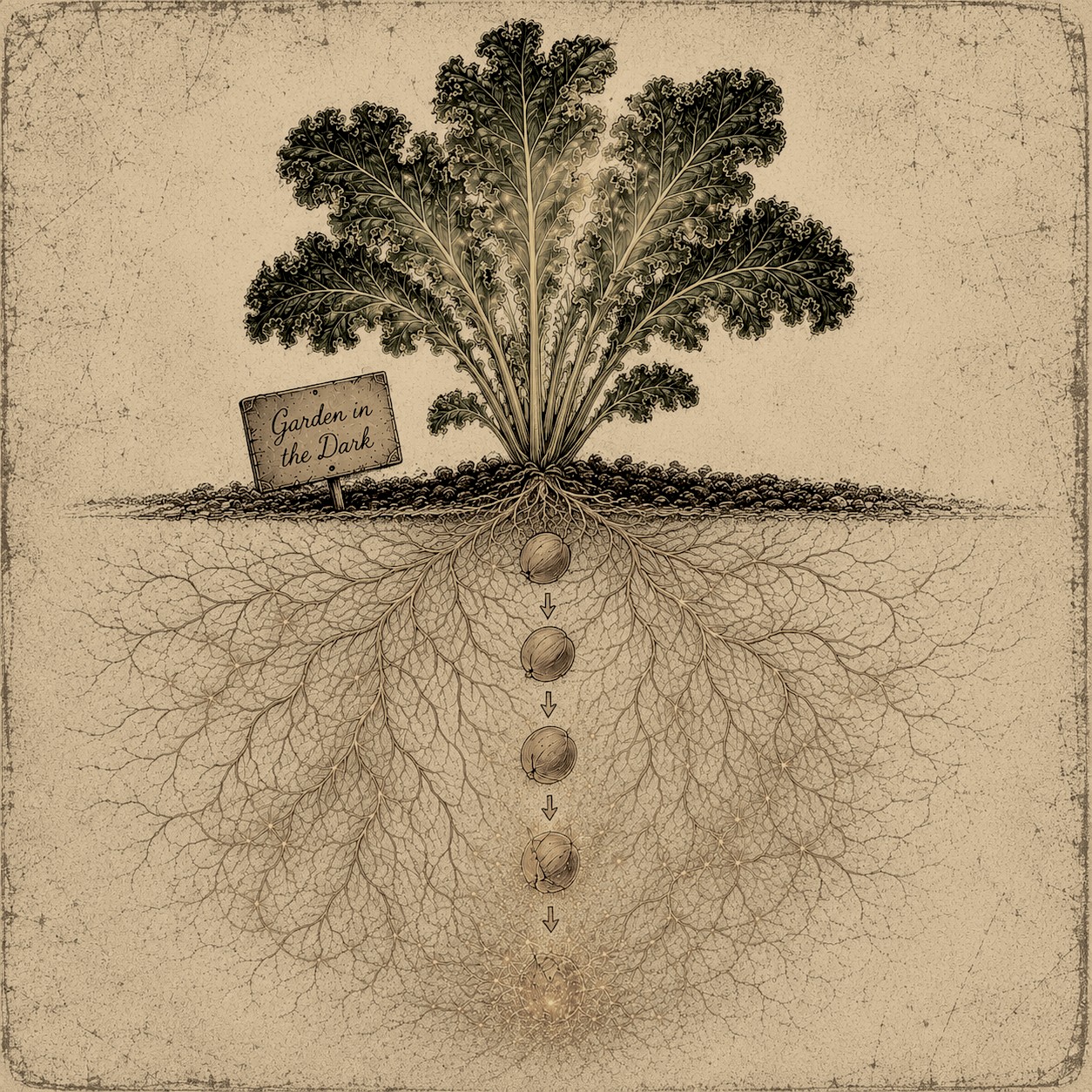
“Thirty kinds across a week is all the garden needs.”
The science behind the song
The “thirty plants a week” figure that runs through this album comes from the American Gut Project, a citizen-science study that sequenced the gut microbiomes of over 10,000 participants alongside detailed dietary surveys. The clearest single finding from that dataset: people who ate more than 30 different types of plants a week had measurably more diverse gut microbiomes than those eating 10 or fewer, and this held regardless of whether they identified as vegan, vegetarian or omnivore. Diet label mattered less than the sheer variety of plant foods on the plate.
Diversity matters because different fibres feed different bacterial species. A gut microbe community fed the same handful of foods on repeat ends up dominated by whichever species are best at using those specific fibres, while other, equally useful species go unfed and decline. A wider range of plants supports a wider range of bacteria, each contributing its own mix of fermentation products, chiefly the short-chain fatty acids, including butyrate, that feed and maintain the gut lining.
Thirty is a target, not a strict threshold, and it counts herbs, spices, nuts, seeds, grains and pulses alongside fruit and vegetables, which makes it considerably more achievable across a week than it first sounds.
- Butyrate
- A short-chain fatty acid produced when gut bacteria ferment fibre, and the primary fuel source for the cells lining the colon.
References
McDonald, D., Hyde, E., Debelius, J. W., et al. (2018). American Gut: An open platform for citizen science microbiome research. mSystems, 3(3). https://doi.org/10.1128/msystems.00031-18