Just Tofu
“I taste of nothing till you make me yours, then I’m soy and fury, I’m a thousand doors.”
The kitchen science behind the song
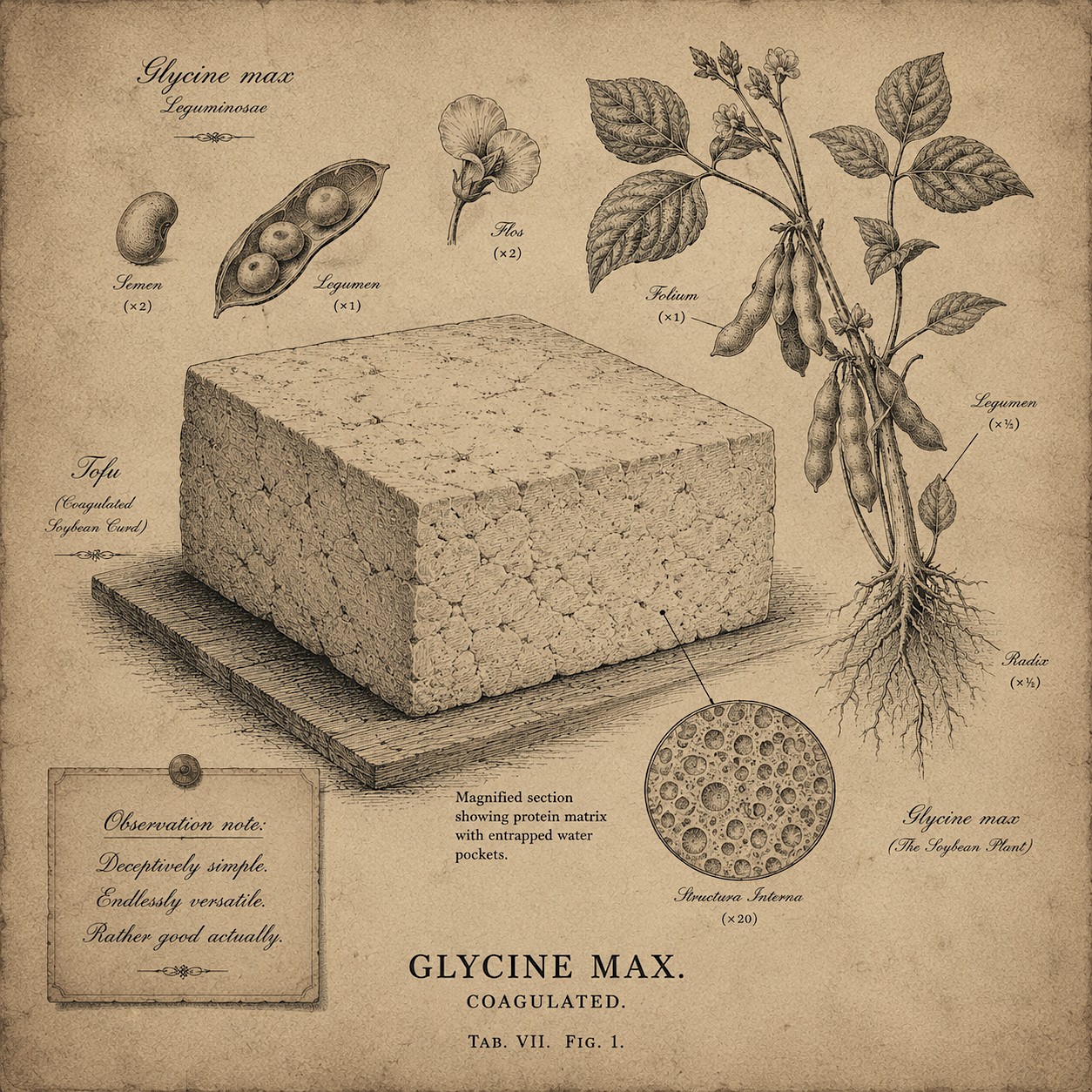
Fresh tofu is mostly water, roughly 85 to 90%, held inside a soft gel of coagulated soy proteins (mainly glycinin and beta-conglycinin), set using a coagulant such as nigari (magnesium chloride) or gypsum (calcium sulfate). That tightly packed structure is exactly why a block straight from the packet tastes of very little: there isn’t much room for a marinade to get in, and what does penetrate barely travels below the surface.
Freezing changes the physics. Below about minus one degree, the water inside the tofu begins forming ice crystals, and because tofu’s dissolved proteins and salts only lower its freezing point slightly, that water freezes largely around the protein network rather than staying trapped within it. As the crystals grow they push the protein strands apart, and once the tofu is thawed and pressed, the melted water drains away and leaves behind a network of small, connected pockets, the texture cooks describe as spongy. That extra surface area, and the open channels running through the block, are what let a marinade travel all the way through rather than sitting on top of it.
It’s a trick long used in Chinese and Japanese home cooking, well before “freeze your tofu” became a piece of internet advice, and it needs nothing more than a freezer and a bit of patience: freeze it solid, thaw it fully, press out the water, then marinate as you normally would.