Kelp Forest
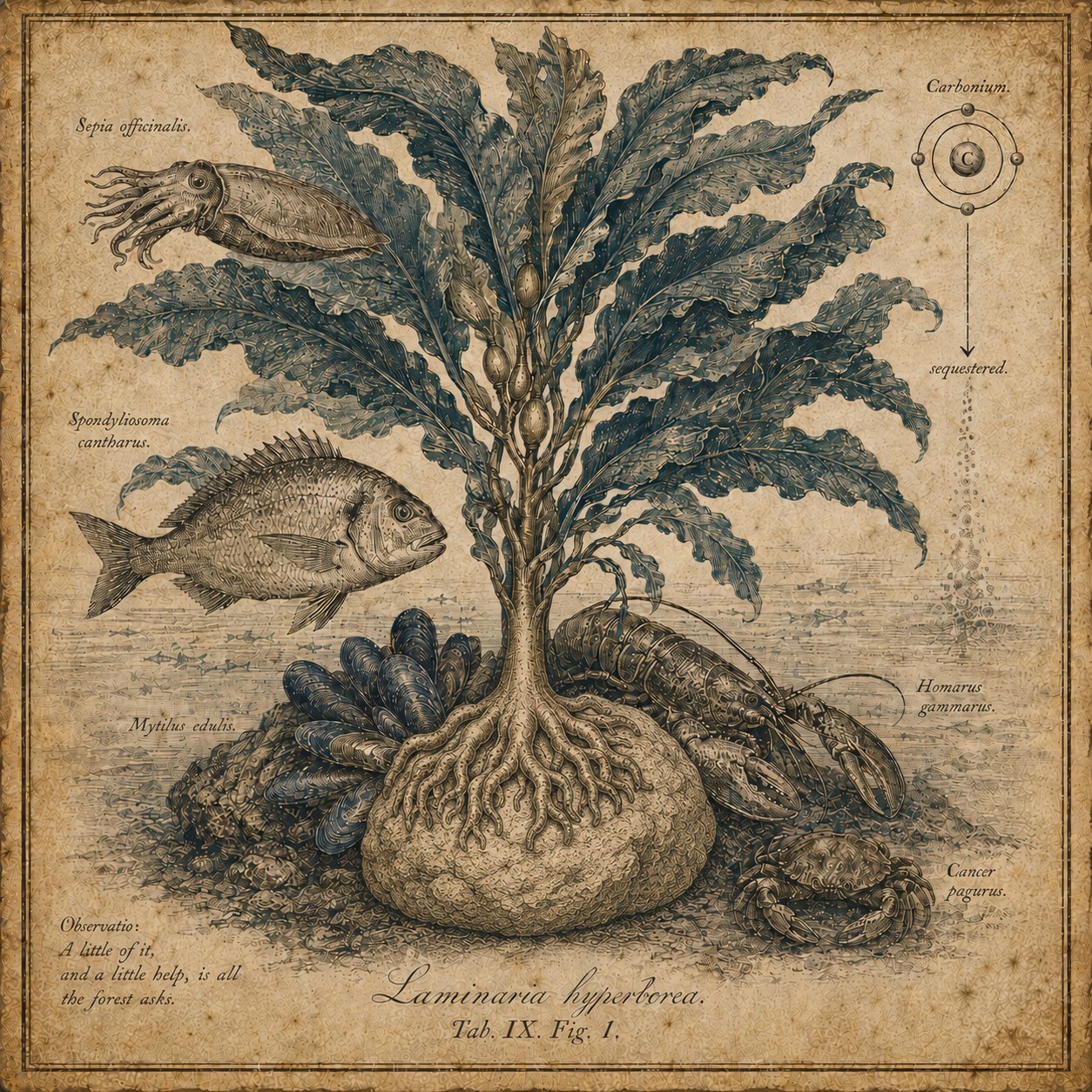
“A little bit of kelp, a little bit of help, that's all it takes to bring a forest home.”
The story behind the song
Kelp forests once ran for more than 40 kilometres along the Sussex coast, between Shoreham-by-Sea and Selsey Bill. A severe storm in 1987 damaged much of it, and the kelp never recovered afterwards, largely because ongoing bottom trawling kept disturbing the seabed the kelp needed to re-establish on. By the late 2010s, over 96% of Sussex's historic kelp forest had been lost.
The Help Our Kelp partnership, led by Sussex Wildlife Trust alongside Blue Marine Foundation, the Marine Conservation Society and Big Wave Media, and publicly supported by Sir David Attenborough, campaigned for protection. On 18 March 2021, the Sussex Inshore Fisheries and Conservation Authority's Nearshore Trawling Byelaw came into force, excluding trawling from 304 square kilometres of Sussex seabed, one of the largest such byelaws in the UK. The Sussex Kelp Recovery Project, now a partnership of eleven organisations, continues to monitor the results; early signs of recovery, including increases in species such as black sea bream and blue mussels, are being recorded, though full-scale kelp forest regrowth is expected to take considerably longer.
Kelp forests matter well beyond Sussex. They provide habitat and nursery grounds for a wide range of marine species, buffer the coastline from wave energy, and draw down carbon as they grow. Some of that carbon is exported and buried in deep-sea sediment when fragments of kelp break away and sink, though, as the song's bridge notes, kelp left to rot in the shallows can also release carbon back into the water rather than storing it, which is one reason the depth and location of kelp loss and regrowth matters for its climate value.
Scotland's kelp story is one of scale and starting point rather than recovery. Much of Scotland's coastline still holds extensive standing kelp forest, chiefly cuvie kelp (Laminaria hyperborea), the main forest-forming species around Scottish shores, which grows to around 5 metres deep in darker sea lochs and beyond 30 metres in the clearer waters around St Kilda. NatureScot lists kelp beds as a Priority Marine Feature, protected across 17 locations within Scotland's Marine Protected Area network. A single kelp holdfast can shelter between 30 and 70 different species, and the forest canopy is thought to buffer stretches of the Scottish coast from storm wave energy, much as Sussex's kelp forest once did before it was lost. Sussex and Scotland sit at opposite ends of the same picture: one coastline rebuilding kelp forest from a 96% loss, the other still holding onto forest that was never taken away in the first place.
Sources
Sussex Wildlife Trust. (n.d.). Sussex Kelp Recovery Project. sussexwildlifetrust.org.uk
Sussex Wildlife Trust. (2026, March 18). The Sussex kelp recovery story, five years in. sussexwildlifetrust.org.uk
University of Sussex. (2021, August). Researchers launch annual survey to monitor the health of Sussex seabed following trawler ban. sussex.ac.uk
NatureScot. (n.d.). Kelp beds. nature.scot