Omega-3
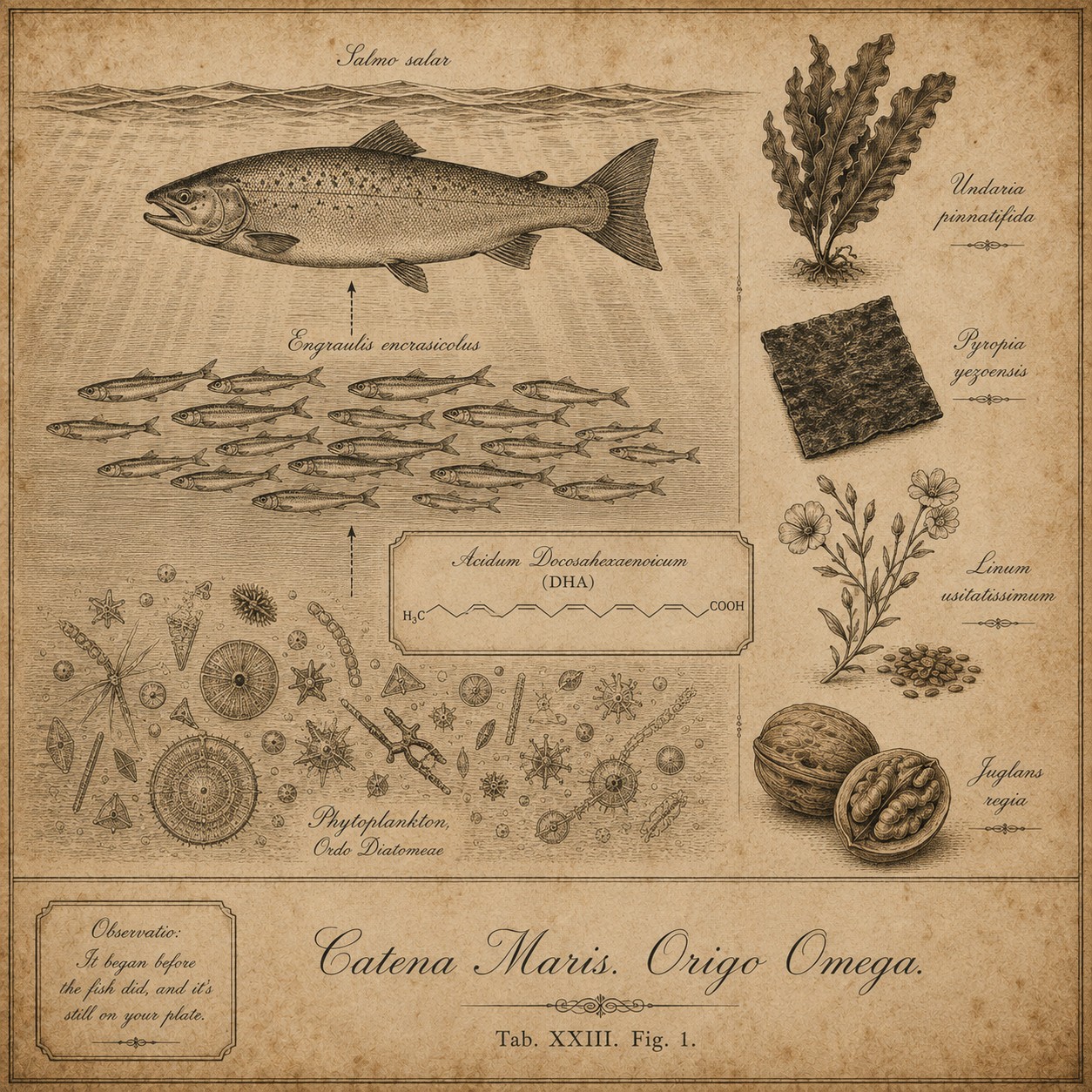
“It started with the algae. It always was the algae.”
The science behind the song
Fish are widely treated as the original source of the long-chain omega-3 fatty acids EPA and DHA, but they aren’t. Fish, like most vertebrates, are very inefficient at making EPA and DHA themselves. The primary producers are marine microalgae, which synthesise these fatty acids directly. Phytoplankton are eaten by small fish and zooplankton, which are eaten by larger fish, and the omega-3s accumulate up the marine food chain along the way. A salmon’s omega-3 content ultimately traces back to algae it never directly ate.
That chain of custody matters practically as well as biologically. Algal oil, extracted directly from cultivated microalgae, supplies EPA and DHA without needing to go through a fish at all, and is chemically the same fatty acid whichever route it arrived by. Seaweeds such as wakame and nori also contain some omega-3s directly, since they're photosynthetic organisms from the same broad marine lineage.
Flax, chia and walnuts are a separate case. They supply alpha-linolenic acid (ALA), a shorter-chain omega-3 that the body can convert into EPA and DHA, but only inefficiently, typically well under 10% of intake. They’re a useful part of the picture, but not a direct substitute for the algae-derived long-chain forms.
References
Ruyter, B., et al. (2020). The primary producers of omega-3 long-chain polyunsaturated fatty acids in the marine food chain. In Oil from transgenic Camelina sativa as a source of EPA and DHA in feed for European sea bass. pmc.ncbi.nlm.nih.gov