Toll the Bell
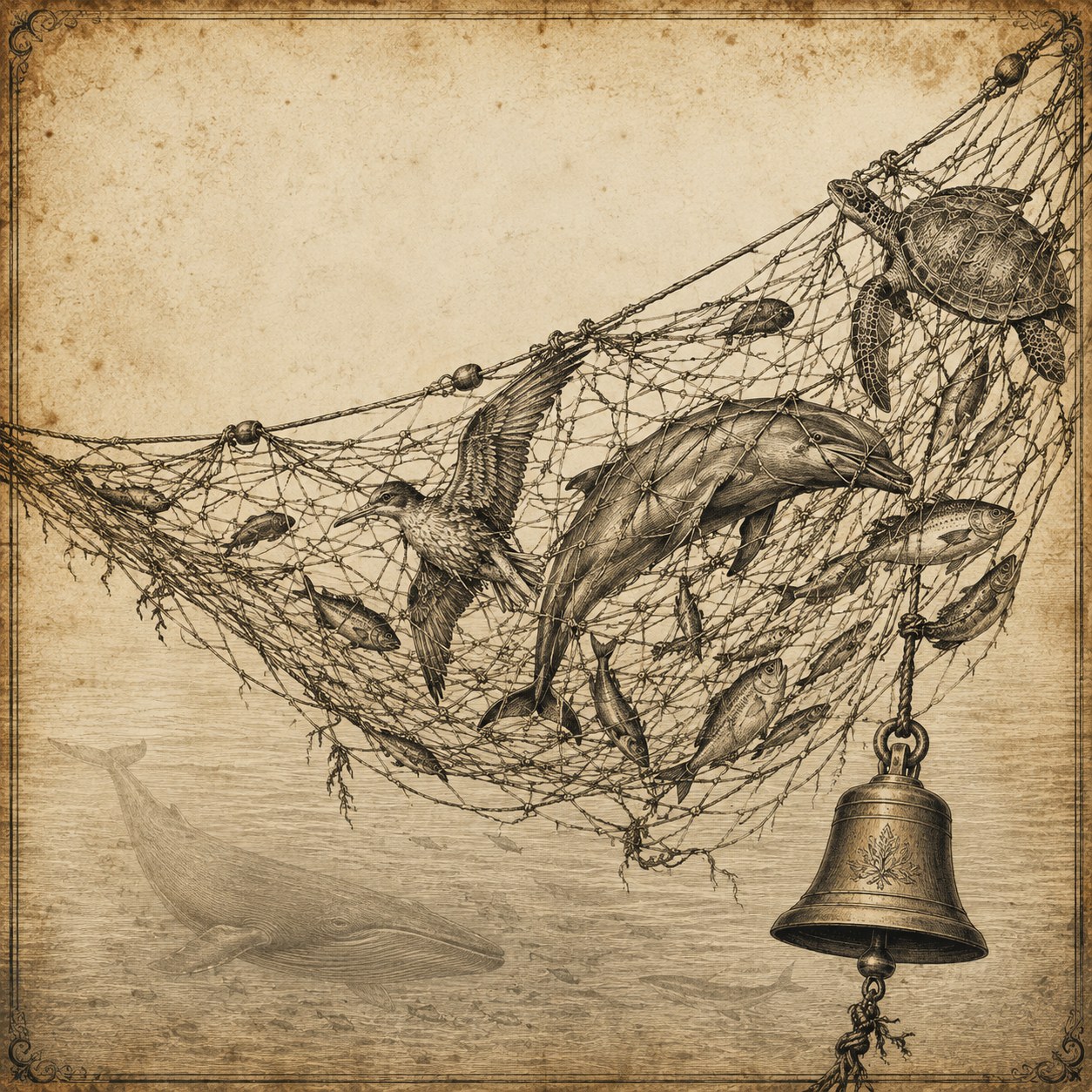
“Toll the bell for the ones unnamed, the sea keeps no ledger, files no claim.”
The story behind the song
Bycatch is the incidental capture of non-target species, turtles, dolphins, seabirds, sharks and undersized or unwanted fish, in gear set for something else. It happens across almost every method of commercial fishing: bottom trawls, longlines, gillnets and purse seines all catch more than their intended target, and the animals caught are usually killed or fatally injured in the process.
Nobody has a precise global figure, and the song is deliberately careful not to claim one, because monitoring at sea is patchy and self-reported data is not independently verified in most fisheries. Older FAO-linked estimates put total discarded bycatch at around 27 million tonnes a year; more recent analyses, using broader definitions that include bycatch that is retained rather than discarded, put the figure considerably higher. A 2021 WWF report estimated that at least 720,000 seabirds, 300,000 whales, dolphins and porpoises, 345,000 seals and sea lions, and over 250,000 sea turtles die in fishing gear worldwide each year, on top of tens of millions of sharks.
What is well established is that certain gear types are disproportionately responsible. Bottom trawling and long, unattended gillnets and longlines produce the highest bycatch rates relative to target catch. Turtle excluder devices and other gear modifications can reduce bycatch substantially where they're required and used, but uptake is inconsistent worldwide. The song's central image, a sea that “keeps no ledger,” reflects a genuine and widely acknowledged gap in how bycatch is currently tracked.
A June 2026 report from Wildlife and Countryside Link, a coalition of 97 environmental organisations, put fresh, UK-specific figures on that gap. It estimates that UK fishing boats bycatch over 10,000 seabirds, over 1,000 cetaceans, chiefly harbour porpoises and common dolphins, around 500 seals, and over 1,000 Atlantic salmon every year, on top of more than 120 tonnes of protected sharks, skates and rays. The report argues these are still undercounts: current monitoring covers a small fraction of UK fishing days at sea, from around 2.4% for midwater trawling down to under 0.01% for trap fishing, and excludes foreign vessels fishing in UK waters entirely. Fishers are legally required to report marine mammal bycatch, yet a freedom of information request cited in the report found only nine such reports since the requirement began in 2021, against an estimated several thousand actual deaths over the same period. It's a smaller, sharper version of the same ledger the song is singing about.
Sources
Wildlife and Countryside Link. (2026, June). Hidden in the haul: The true scale of bycatch. wcl.org.uk
WWF & Sky Ocean Rescue. (2021). What's in the net: Global bycatch of marine wildlife. wwfwhales.org
Bycatch estimates vary considerably between sources depending on methodology and definition; figures here reflect the ranges reported in the cited sources rather than a single agreed total.