Where’s My Protein?
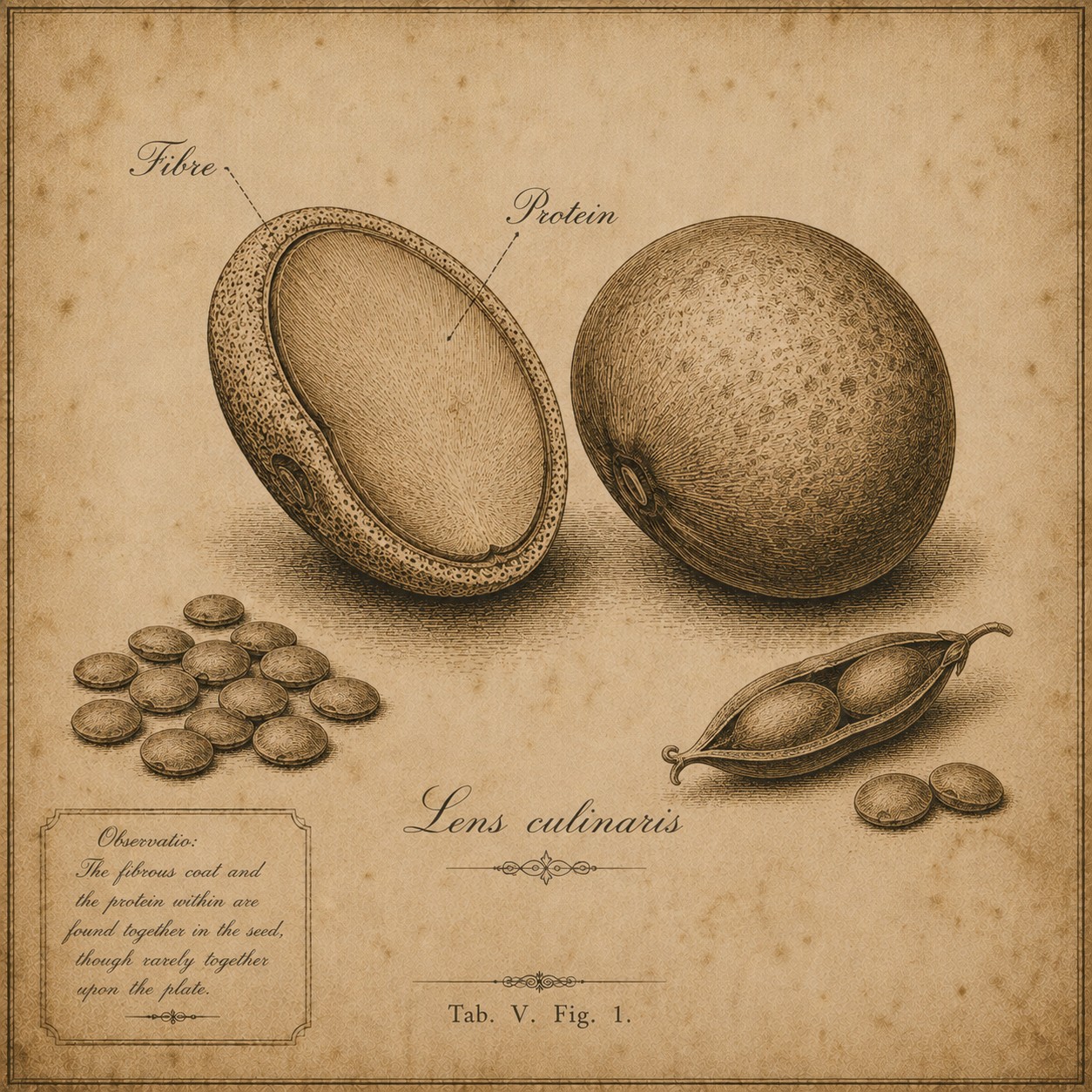
“It’s the fibre that’s gone missing, that’s the gap that wants addressing.”
The science behind the song
British Nutrition Foundation figures, drawn from the National Diet and Nutrition Survey, put average UK adult protein intake at 76g a day for 19 to 64 year olds, comfortably above the Reference Nutrient Intake of 0.75g per kilogram of body weight, around 56g a day for an average man. Protein deficiency is genuinely rare in the UK population. Fibre tells a different story: the same survey data puts average adult fibre intake at around 18g a day, against a recommended 30g, with only about 9% of adults actually meeting that target.
What happens to each of these in the gut also differs. Fibre that reaches the colon undigested is fermented by resident bacteria into short-chain fatty acids, acetate, propionate and butyrate, which feed the cells lining the gut and are linked to a range of protective effects. Protein that arrives in the colon unabsorbed is fermented too, but into a different set of by-products: ammonia, branched-chain fatty acids, and sulphur-containing and phenolic compounds such as p-cresol, several of which have been associated with damage to the gut lining and are found at higher levels in some digestive conditions.
Pairing protein with fibre changes that balance. In laboratory gut-fermentation studies, adding a fermentable fibre alongside protein measurably reduces the production of ammonia and other protein-fermentation by-products, while increasing the bacteria that produce short-chain fatty acids. Beans and lentils do this by default, since they supply protein and fibre in the same food, which is really the pairing the song is pointing at.
- Protein fermentation
- The breakdown of undigested dietary protein by colonic bacteria, producing ammonia, branched-chain fatty acids and phenolic compounds.
- Short-chain fatty acids (SCFAs)
- Beneficial compounds, mainly acetate, propionate and butyrate, produced when gut bacteria ferment dietary fibre.
References
British Nutrition Foundation. (n.d.). Protein. nutrition.org.uk
Gressier, M., & Frost, G. (2024). Increasing fibre intake in the UK: lessons from the Danish Whole Grain Partnership. British Journal of Nutrition. pmc.ncbi.nlm.nih.gov
Diether, N. E., & Willing, B. P. (2019). Microbial fermentation of dietary protein: An important factor in diet–microbe–host interaction. Microorganisms, 7(1), 19. https://doi.org/10.3390/microorganisms7010019