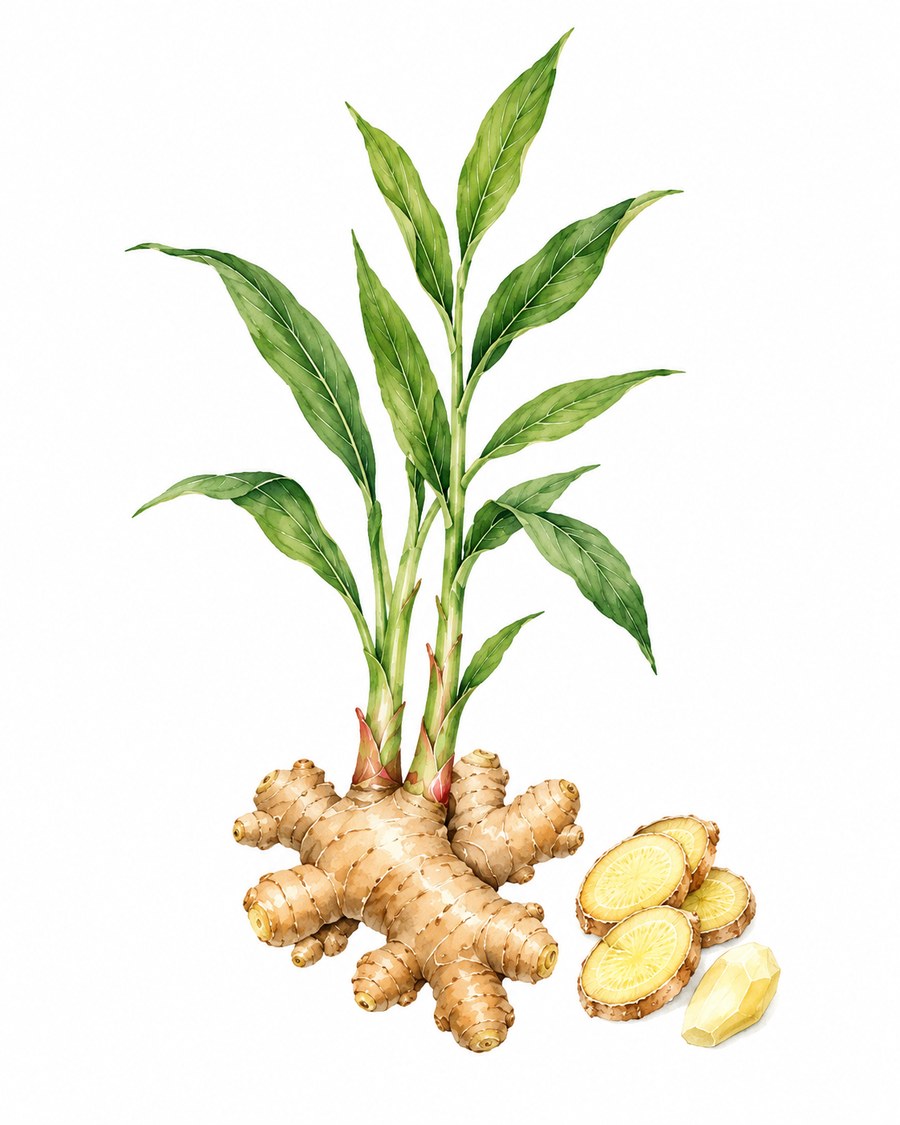
What is in it
The part of ginger we eat is the rhizome, an underground stem. Most of the human research has not tested it as a food at all, but as ginger powder in capsules, typically 1 to 3 g a day for inflammation, oxidative stress and blood sugar, and 500 to 1,500 mg a day for nausea in pregnancy (Paudel et al., 2025).
Microbial partners
We have not yet found good human evidence on how ginger affects gut bacteria. The trials summarised on this page tested ginger capsules against nausea, inflammation and blood sugar, and did not look at the microbiome (Paudel et al., 2025). What we do have is an early laboratory study.
Proteobacteria
Stool samples from 19 healthy Korean adults, all with a Bacteroides-dominant gut community, were incubated with ginger powder for 24 hours. Ginger raised the share of Proteobacteria, mainly Acinetobacter and an unidentified member of the Enterobacteriaceae family.
Laboratory study using human stool (Kim et al., 2025)
Bacteroidota
In the same samples, the share of Bacteroidota fell. Overall diversity did not change, but the make-up of the community shifted at both ginger doses tested.
Laboratory study using human stool (Kim et al., 2025)
The authors do not say whether these shifts are good or bad for health, and the study has clear limits. The ginger was not digested first, so the amounts reaching the bacteria may be higher than in a real gut, which the authors say could exaggerate the effects. Only one type of gut community was tested, and samples were incubated for just one day. The authors point to one human study, which they report found a rise in Proteobacteria in 123 healthy adults after a week of drinking 30 g of fresh ginger juice a day (Wang et al., 2021, as cited in Kim et al., 2025). We have not read that study yet. The laboratory work was funded by Korean government research grants, and the authors declare no financial conflicts of interest.
What the evidence tells us
Well supported
None of ginger’s popular claims yet reaches this label. The findings below are real, but they rest on studies of modest quality with results that vary considerably from trial to trial.
Promising
Nausea in pregnancy. A meta-analysis of 12 randomised trials with 1,278 pregnant women found that ginger improved nausea compared with placebo, but did not significantly reduce vomiting. The authors rated the quality of evidence as low, noting small studies and ginger’s distinctive taste, which makes it hard to disguise in a placebo-controlled trial (Viljoen et al., 2014). A later meta-analysis found ginger no better than vitamin B6 (Paudel et al., 2025).
Markers of inflammation and oxidative stress. Meta-analyses of randomised trials found that ginger supplements lowered C-reactive protein and tumour necrosis factor-α, but not interleukin-6. They also lowered malondialdehyde, a marker of oxidative damage, and raised the antioxidant enzyme glutathione peroxidase. The results varied greatly between trials, which the authors put down partly to differences between ginger products (Paudel et al., 2025).
Blood sugar in type 2 diabetes. In ten trials of people with type 2 diabetes, ginger supplements lowered HbA1c and fasting blood glucose (Paudel et al., 2025).
Plausible pathway
Everyday ginger in food. Lower markers of inflammation and oxidative stress are a plausible route to wider health benefits, but the studies measured markers in the blood, not health outcomes, and they tested supplements rather than the fresh ginger we cook with.
What we do not know
We do not know how a small thumb of fresh ginger compares with the powdered doses used in trials, or whether regular culinary use has the same effects. In the pregnancy trials, ginger did not significantly increase the risk of miscarriage compared with placebo, although that estimate was imprecise (Viljoen et al., 2014), so anyone who is pregnant should check with their midwife or doctor before taking ginger supplements.
References
Kim, J., Ha, J., Kim, S., Kim, G., & Shin, H. (2025). Impact of ginger on gut microbiota composition and function in a Bacteroides-dominant enterotype. Journal of Microbiology and Biotechnology, 35, Article e2503032. https://doi.org/10.4014/jmb.2503.03032
Paudel, K. R., Orent, J., & Penela, O. G. (2025). Pharmacological properties of ginger (Zingiber officinale): What do meta-analyses say? A systematic review. Frontiers in Pharmacology, 16, Article 1619655. https://doi.org/10.3389/fphar.2025.1619655
Viljoen, E., Visser, J., Koen, N., & Musekiwa, A. (2014). A systematic review and meta-analysis of the effect and safety of ginger in the treatment of pregnancy-associated nausea and vomiting. Nutrition Journal, 13, Article 20. https://doi.org/10.1186/1475-2891-13-20