Recipes and the Science
Everyday food. Extraordinary biology.
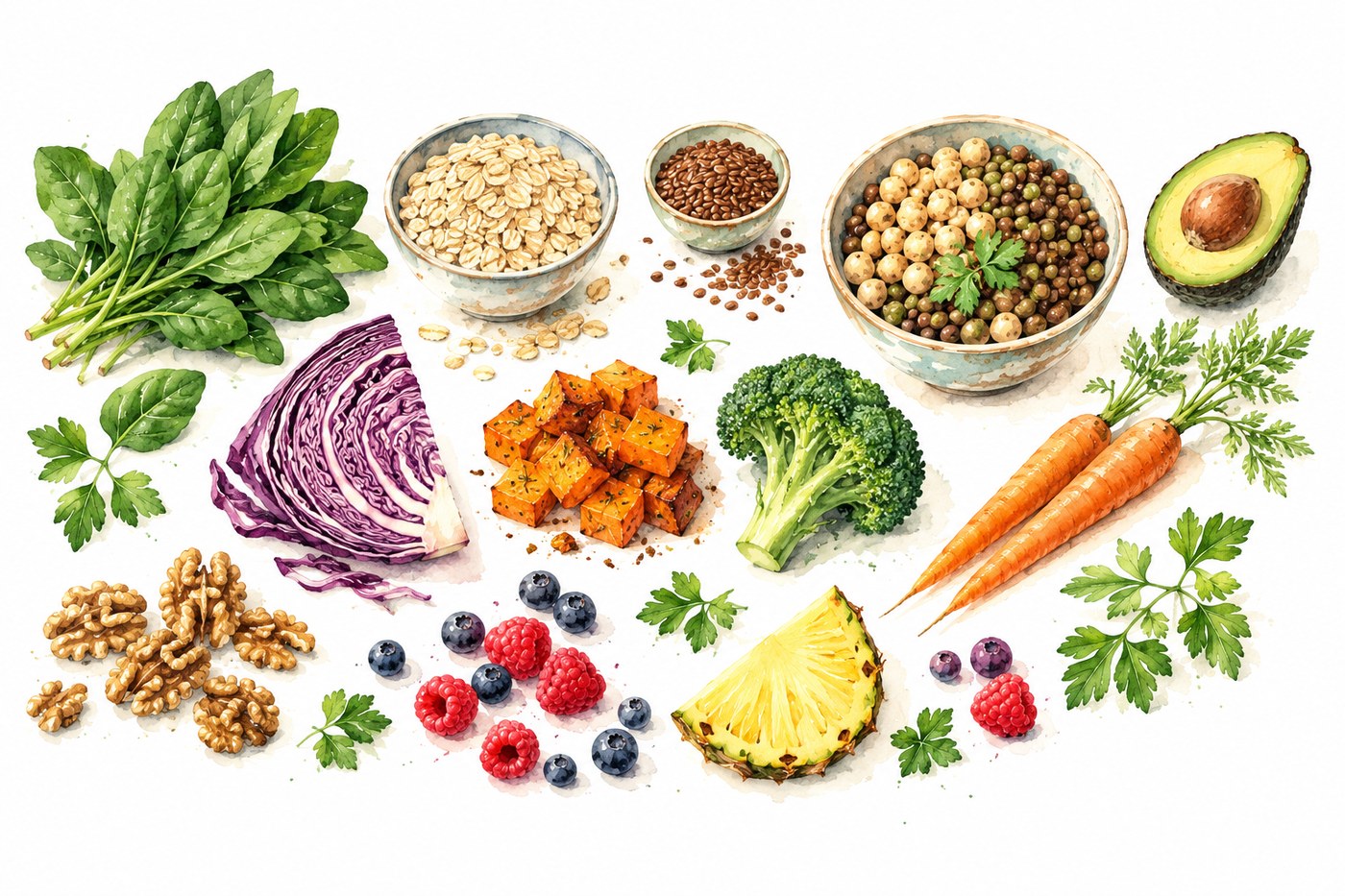
Ten plants. One recipe. The science behind it.
These are my own plant-based recipes, each paired with a short look at the biology behind its ingredients. Some of what happens after we eat is well established, some is promising but still being tested, and some is a plausible pathway that has not yet been shown to make a meaningful difference to health. Each recipe says which is which, and every one contains ten different plant foods.
How each recipe is set out
- The recipe
- Ingredients, quantities, method and substitutions, with my own photographs or botanical illustrations.
- The science behind it
- A short explanation of the nutrients, phytochemicals, microbial metabolites or physiological pathways involved.
- What the evidence tells us
- A summary that separates established mechanisms, human intervention studies, observational associations and hypotheses, with links to the original research.
- The bigger picture
- Where the evidence supports it, how the recipe connects to gut health, the immune system, vascular function, cognitive ageing or One Health.
- References
- A small selection of peer-reviewed papers, with a deeper scientific explanation for readers who want one.
Reading the evidence labels
Mechanistic plausibility is easily mistaken for proven benefit, especially in areas such as dementia prevention and the microbiome. Every claim on these pages carries one of three labels.
Established nutritional or physiological findings, backed by consistent human evidence.
Human research with encouraging results that still needs replication or further investigation.
A biological mechanism that makes sense but has not yet been shown to deliver meaningful clinical benefit.
Before you start
These recipes are built around fibre-rich plant foods. If you are not used to eating much fibre, increase it gradually to avoid bloating and gas, and drink plenty of fluid to help the fibre do its job (British Dietetic Association [BDA], 2021; Guts UK, n.d.). Adults are recommended to aim for around 30 g of fibre a day (BDA, 2021).
These pages share research for information. They are not a substitute for advice from your GP, a dietitian or another health professional. If you have a health condition, take regular medication or are pregnant, check with them before making big changes to your diet.
First recipes
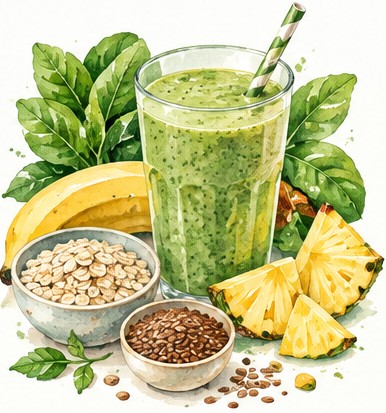
The NO-Boost Smoothie
A spinach smoothie exploring dietary nitrate, the oral microbiome, nitric oxide and vascular function.
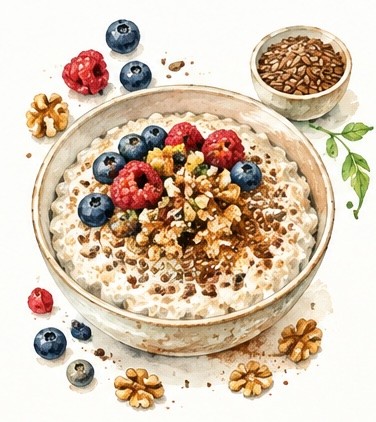
The Gut-Brain Breakfast
A bowl of porridge exploring fibre, the gut-immune-brain axis and what it might mean for cognitive health.
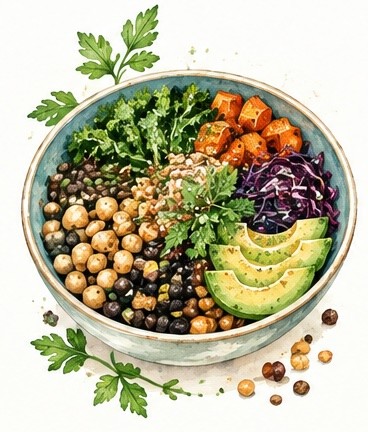
The Microbial Feast
A high-fibre bean-based meal exploring microbial fermentation, short-chain fatty acids and microbial diversity.
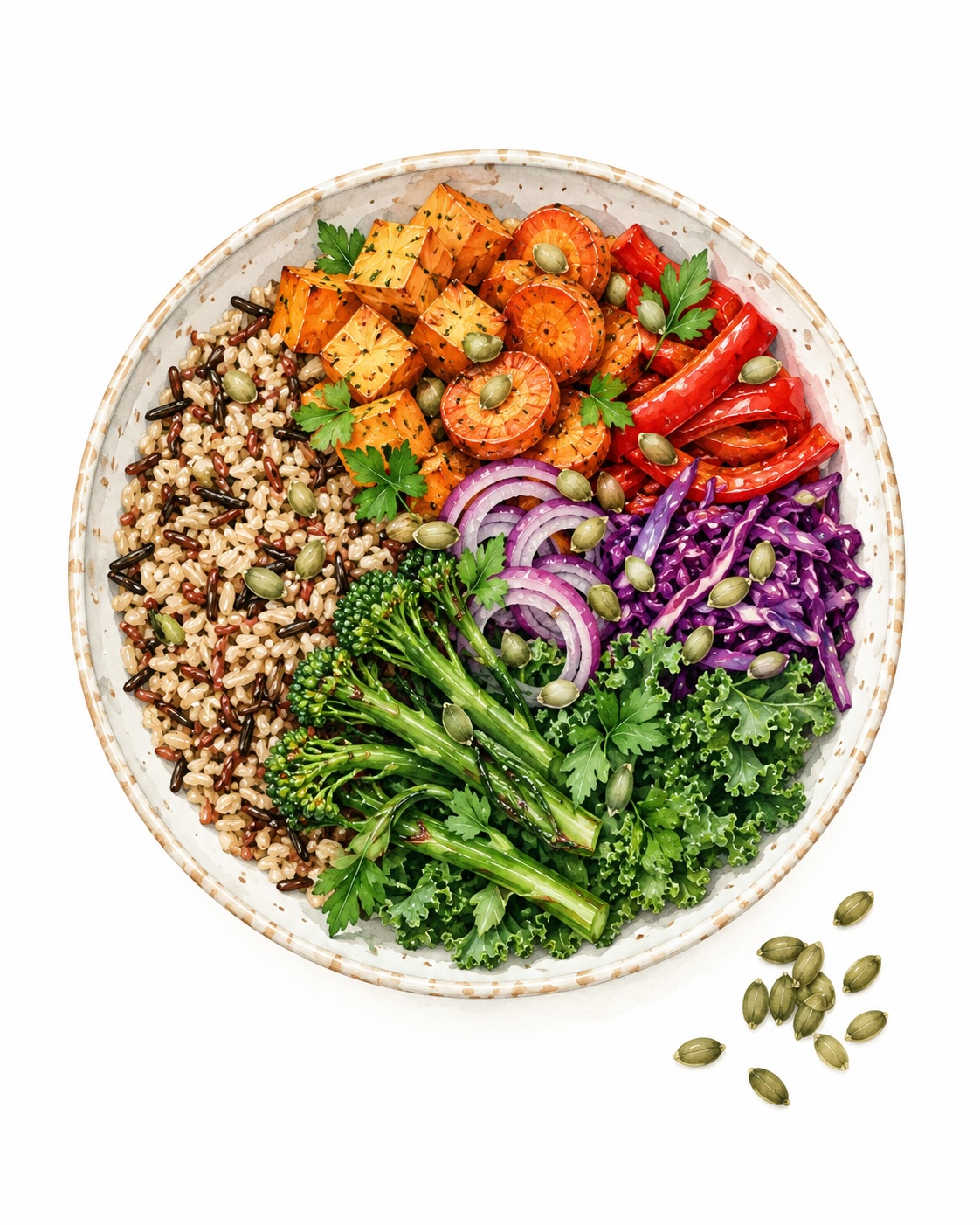
The Phytonutrient Plate
A rainbow plate exploring carotenoids, sulforaphane and anthocyanins, and why some need fat, some need chewing and some need your gut microbes.
Learn more
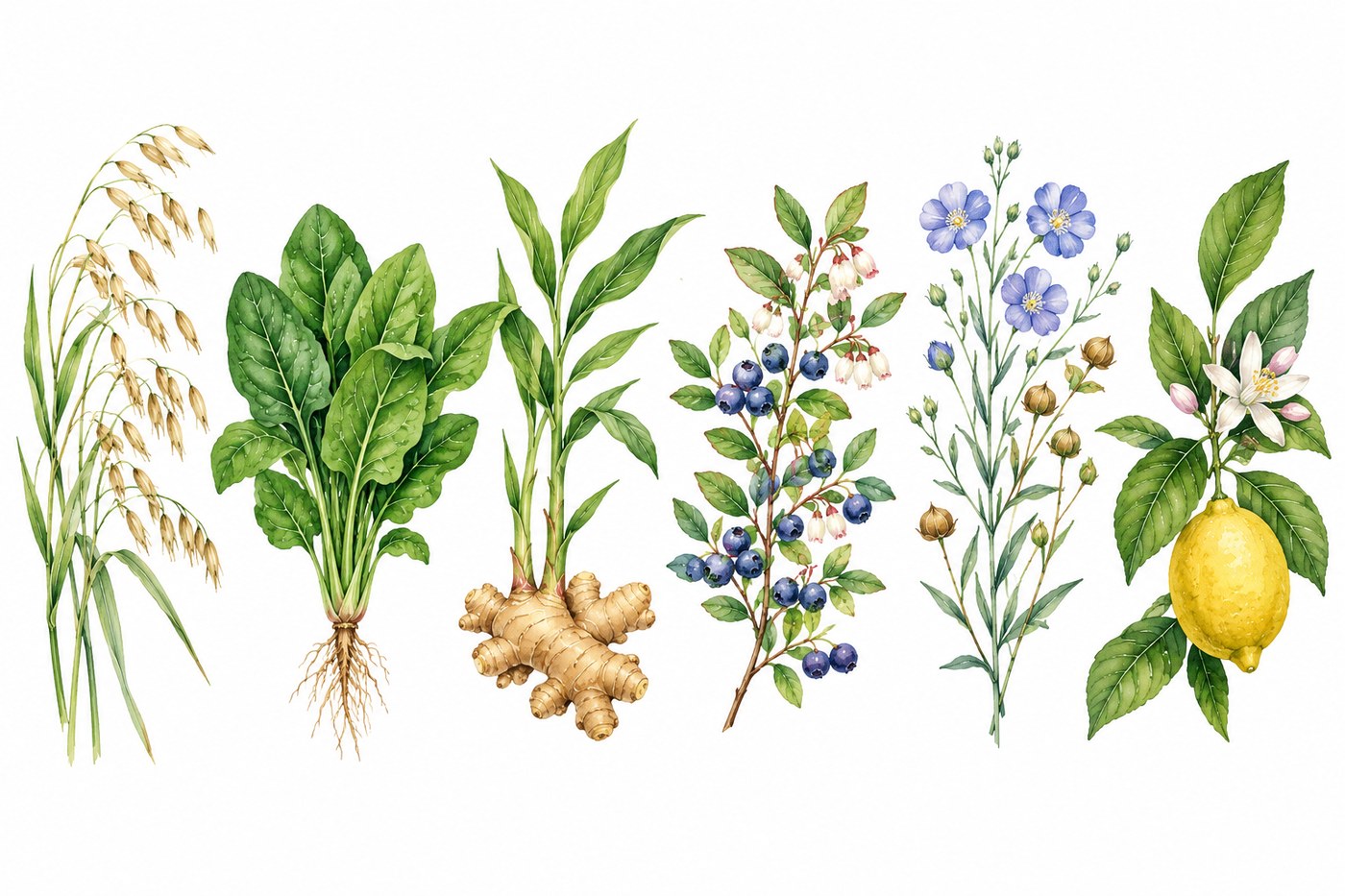
Meet the Plant
One plant at a time, and what the evidence actually says about it. The plant tags in each recipe link straight to their profiles.
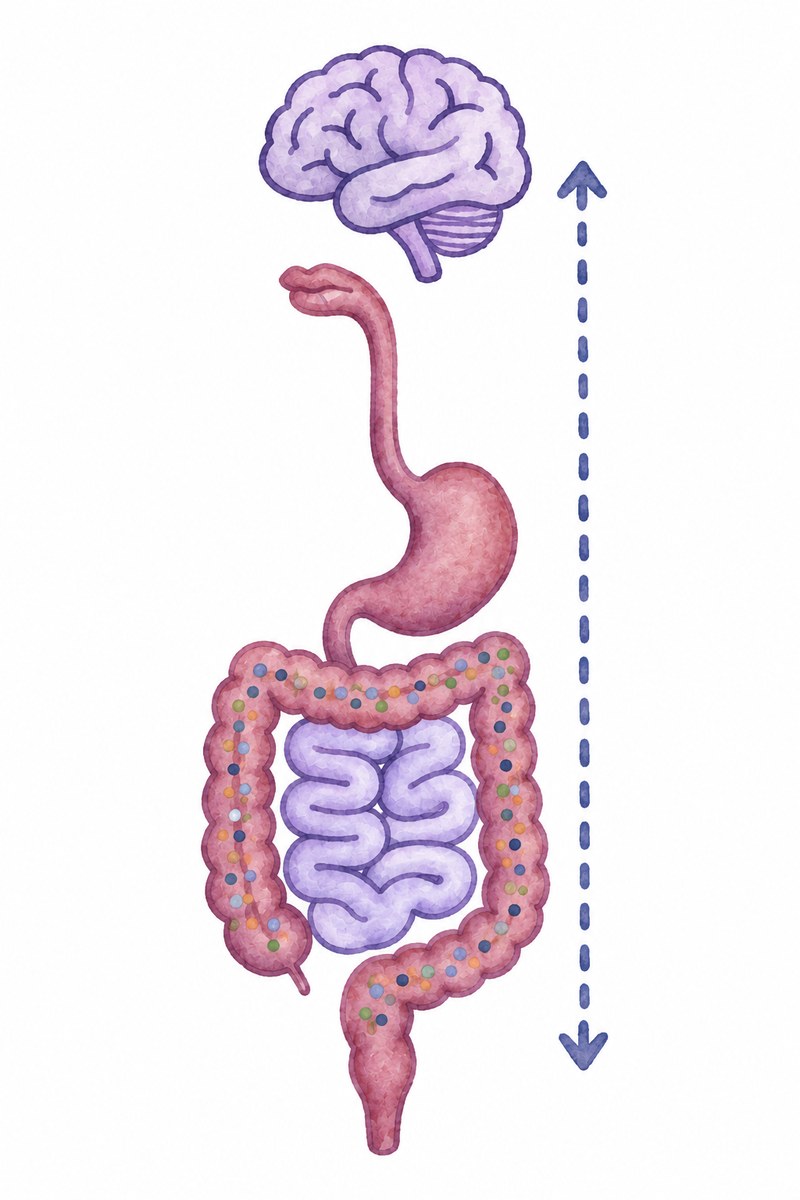
The Gut-Immune-Brain Axis (GIBA)
Follow a meal from the first bite to the final exit, and the conversation between the gut and the brain along the way.
For the claims behind popular diet trends, see Evidence Check.
References
British Dietetic Association. (2021). Fibre: Food fact sheet. https://www.bda.uk.com/asset/F602FC35-FF7F-4D2C-90C89B145C43396C
Guts UK. (n.d.). How to increase your fibre intake. Retrieved October 18, 2026, from https://gutscharity.org.uk/how-to-increase-your-fibre-intake/