After decades of being told to fear fat, we are now being told to eat more of it. Both messages make the same mistake: they treat fat as a single thing.
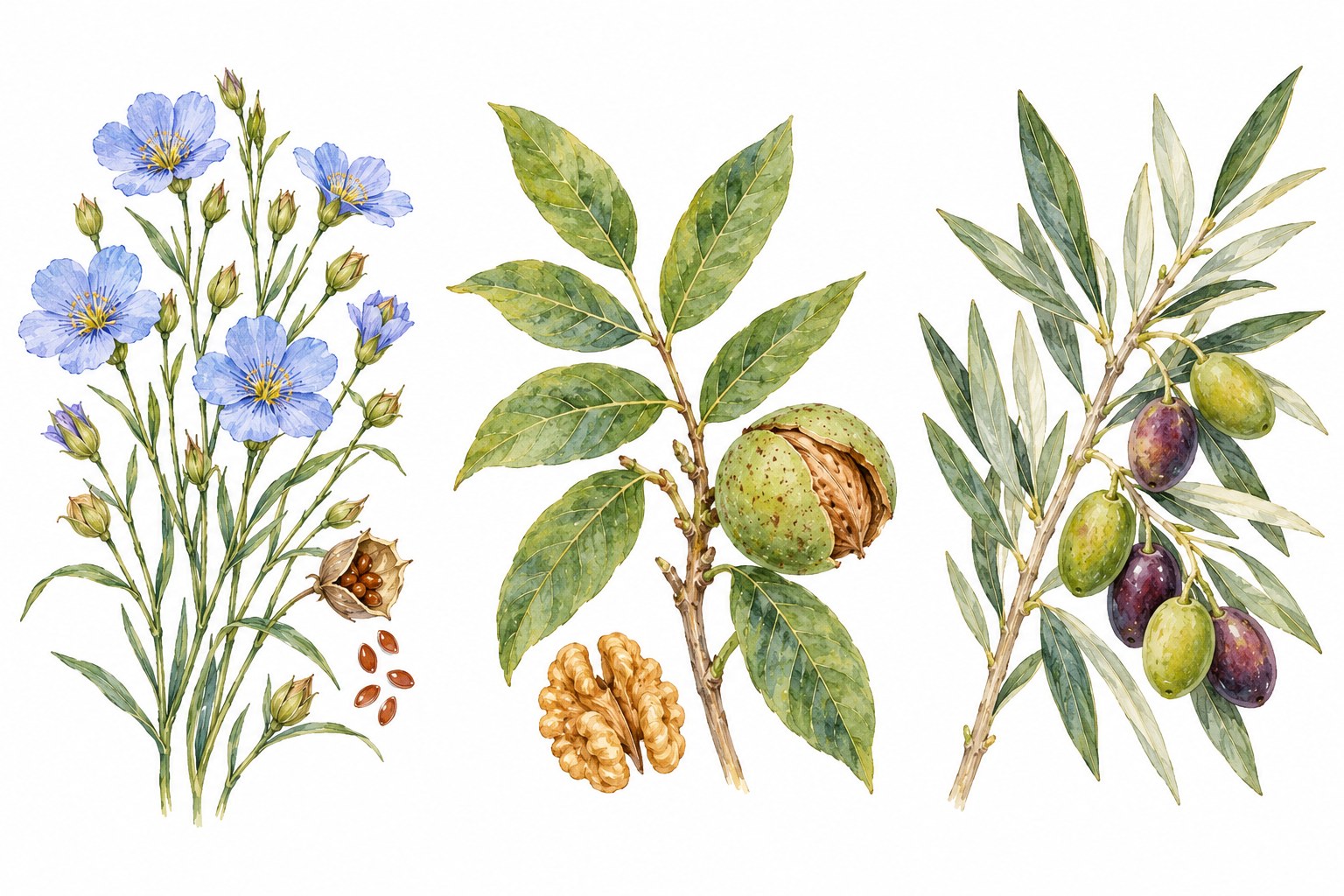
The low-fat advice of the late twentieth century pushed many people towards diets built on refined carbohydrates, and the correction away from it has been welcome. In places, though, the pendulum has swung to the opposite slogan. “Eat more fat” now turns up across wellness media and occasionally in professional advice, as if the word described one substance with one set of effects. It does not. Saturated, monounsaturated and polyunsaturated fatty acids differ in their chemistry, in the foods that carry them, and in how the body handles them. So, what does the evidence say about three of the most common fat-friendly claims, and where does it matter which fat ends up on the plate?
“The brain is 60% fat, so saturated fat feeds the brain”
The brain is one of the most lipid-rich organs in the body, and reviews of fatty acids in the brain put it at nearly 60% fat (Chang et al., 2009), which is where the popular figure comes from. What the slogan leaves out is that the fats forming the brain’s architecture are highly specific. Myelin, the insulating sheath around nerve fibres, is rich in complex lipids such as sphingomyelin, and neuronal membranes are enriched in the long-chain omega-3 fatty acid docosahexaenoic acid (DHA). DHA cannot be made within the brain itself and has to be imported across the blood-brain barrier. Nguyen et al. (2014) identified a transporter called Mfsd2a as the main route for that import, and mice lacking it had markedly lower brain DHA, neuronal loss in the hippocampus and cerebellum, and smaller brains. The fact that the brain contains a lot of fat therefore tells us nothing about whether eating more saturated fat helps it. The question that matters is whether the brain receives the particular fatty acids it cannot make for itself.
This is also where plant-forward advice needs to be precise. Walnuts, flaxseed, chia and hemp are excellent sources of alpha-linolenic acid (ALA), a shorter omega-3, but they contain no DHA. The body can convert some ALA into longer-chain omega-3s, but stable isotope tracer studies show that conversion to EPA is limited in men and further conversion to DHA is very low, with somewhat higher conversion in women that may reflect the influence of oestrogen (Burdge & Calder, 2005). ALA-rich seeds and nuts are still well worth eating, not least because they arrive with fibre and polyphenols, but they are not a dependable route to brain DHA. For people who do not eat oily fish, microalgal oil provides preformed DHA directly from the organisms that put it into the marine food chain in the first place.
The verdict on this claim is that it is false. The brain needs specific fats, and saturated fat is not the one in short supply.
“As long as you avoid trans fats, all other fats are healthy”
Removing industrially produced trans fats from the food supply is one of the few points on which nutrition science is close to unanimous. The idea that every other fat is therefore equally fine is harder to defend. The most comprehensive test comes from a Cochrane review of randomised controlled trials by Hooper et al. (2020), which pooled 15 trials with more than 56,000 participants and found that reducing saturated fat for at least two years lowered the risk of combined cardiovascular events by 17%, with larger reductions in saturated fat linked to larger benefits. The same review found little effect on the risk of dying, and it could not clearly separate the effects of replacing saturated fat with polyunsaturated fat from replacing it with carbohydrate, while data on replacement with monounsaturated fat were very limited. In practical terms, around 56 people without existing heart disease would need to cut their saturated fat for roughly four years for one of them to avoid a heart attack or stroke. That is a real, moderate-quality effect, and it sits firmly against the idea that the type of fat is irrelevant.
The mechanism most often offered for why saturated fat is different is inflammation, and here the popular story needs a little updating. It is frequently said that saturated fatty acids such as palmitate switch on Toll-like receptor 4 (TLR4), an immune sensor better known for detecting bacterial components. Palmitate does provoke inflammatory signalling in immune cells in the laboratory, and TLR4 is involved, but Lancaster et al. (2018) found that palmitate is not actually a direct ligand for TLR4. Instead, TLR4 activation appears to reprogramme the metabolism of macrophages so that they respond to saturated fat through a separate stress pathway inside the cell. This is cell and animal work, so it explains how saturated fat could contribute to inflammation rather than how much it does in people eating ordinary diets.
On the other side of the ledger, some unsaturated fats come packaged with compounds that have their own biological activity. Freshly pressed extra virgin olive oil contains oleocanthal, the compound responsible for its peppery sting at the back of the throat. Beauchamp et al. (2005) showed that oleocanthal inhibits the same cyclooxygenase enzymes as ibuprofen, with a strikingly similar profile. That is an enzyme-level finding, and the dose is modest. The authors estimated that 50 g of extra virgin olive oil a day supplies around 9 mg of oleocanthal, roughly a tenth of the ibuprofen dose recommended for adult pain relief, so this is better read as one plausible contributor to olive oil’s benefits than as a natural painkiller. The broader case for olive oil over butter is covered in more detail in Oil’s Well That Ends Well.
The verdict on this claim is that it is misleading. Avoiding trans fats is necessary, but it is not sufficient.
“Dietary fat doesn’t matter to the gut microbiome”
Most dietary fat is absorbed in the small intestine, but the gut microbiome is still affected, both by the fat that reaches the colon and by the bile acids released to digest it. The best human test to date is a six-month controlled-feeding trial in which all food was provided to 217 healthy young adults in China, randomised to diets supplying 20%, 30% or 40% of energy from fat with calories held equal (Wan et al., 2019). The lower-fat diet was associated with greater microbial diversity and more of some bacterial groups such as Blautia, while the higher-fat diet was associated with unfavourable changes in gut bacteria, faecal metabolites and blood markers of inflammation. Two details matter for interpreting this. The added fat came largely from soybean oil, which is rich in omega-6 polyunsaturated fat, so this was not a test of saturated fat. And because calories were held equal, the lower-fat diets carried more carbohydrate, mostly as rice and white flour. The trial therefore compared added seed oil against refined starch rather than testing fat within a fibre-rich, plant-based diet.
The wider human evidence is thinner than the confident claims on either side suggest. A systematic review by Wolters et al. (2019) found six randomised trials and nine cross-sectional studies, and concluded that the trials did not show strong effects of the amount or type of dietary fat on the gut microbiota or on metabolic outcomes, while observational studies linked high intakes of total and saturated fat with lower microbial richness and diversity. That pattern of suggestive associations but modest trial effects is a common one in nutrition, and it is a good reason to hold specific claims about named bacterial families loosely.
The idea that a high-fat diet can weaken the gut barrier and let inflammatory bacterial fragments into the bloodstream comes largely from animal research. In mice, four weeks on a high-fat diet raised circulating levels of bacterial lipopolysaccharide two- to threefold, a state the authors called metabolic endotoxaemia, and this was sufficient to promote weight gain and insulin resistance (Cani et al., 2007). Once inflammatory signals are present in the body, they can influence the brain through several routes, including by activating sensory fibres of the vagus nerve, which relay the signal to the brainstem, and through areas where the blood-brain barrier is naturally more permeable (Dantzer et al., 2008). The inflammatory molecules themselves do not travel up the nerve. A chain running from high saturated fat intake, through a leaky gut, to neuroinflammation and faster cognitive ageing in humans is a reasonable hypothesis that researchers are actively testing, but it has not been demonstrated.
One more piece of the picture is often misattributed. Short-chain fatty acids such as butyrate, which help maintain the gut lining and calm immune activity, are produced when gut bacteria ferment dietary fibre, not fat (Koh et al., 2016). This is a useful reminder that much of what makes nuts, seeds and olives valuable for the gut comes from the fibre and polyphenols they carry rather than the fat itself, and that a bottle of oil, however good, does not feed the microbiome the way the whole food does.
The verdict on this claim is that it is false, but the evidence does not yet support the more dramatic counterclaims either. Fat matters to the microbiome, and fibre matters more.
Does any of this reach cognition?
The most direct trial evidence comes from a sub-study of the Spanish PREDIMED trial, in which 447 cognitively healthy older adults at high cardiovascular risk, average age 67, were randomised to a Mediterranean diet supplemented with a litre of extra virgin olive oil a week, a Mediterranean diet supplemented with 30 g of mixed nuts a day, or advice to reduce dietary fat, and followed for a median of just over four years (Valls-Pedret et al., 2015). Cognitive scores declined in the control group. The olive oil group did better on measures of global cognition and of frontal, or executive, function, and the nut group did better on memory. This is encouraging, but it comes from a single site in Barcelona, a modest sample, and a whole dietary pattern rather than a change in fat alone, so it cannot isolate which component of the diet was responsible.
The bottom line
“Eat more fat” corrects one oversimplification by replacing it with another. The brain does not run on saturated fat; it depends on a specific supply of DHA that it cannot make for itself, and plant-based eaters are better served by microalgal DHA than by assuming seeds will cover it. The strongest trial evidence supports cutting back on saturated fat to reduce cardiovascular events, even if the effect on mortality is small and the best replacement is still debated. The gut microbiome does respond to dietary fat, but the human evidence is more mixed than either side of the debate tends to admit, and the microbial benefits most people are looking for come from the fibre that whole plant foods bring with them. In plain terms, the message is not to eat more fat but to eat better fat, mostly in the form of nuts, seeds, olives and extra virgin olive oil, eaten alongside plenty of fibre, with saturated fat kept modest.
References
Beauchamp, G. K., Keast, R. S. J., Morel, D., Lin, J., Pika, J., Han, Q., Lee, C.-H., Smith, A. B., & Breslin, P. A. S. (2005). Ibuprofen-like activity in extra-virgin olive oil. Nature, 437(7055), 45–46. https://doi.org/10.1038/437045a
Burdge, G. C., & Calder, P. C. (2005). Conversion of α-linolenic acid to longer-chain polyunsaturated fatty acids in human adults. Reproduction Nutrition Development, 45(5), 581–597. https://doi.org/10.1051/rnd:2005047
Cani, P. D., Amar, J., Iglesias, M. A., Poggi, M., Knauf, C., Bastelica, D., Neyrinck, A. M., Fava, F., Tuohy, K. M., Chabo, C., Waget, A., Delmée, E., Cousin, B., Sulpice, T., Chamontin, B., Ferrières, J., Tanti, J.-F., Gibson, G. R., Casteilla, L., . . . Burcelin, R. (2007). Metabolic endotoxemia initiates obesity and insulin resistance. Diabetes, 56(7), 1761–1772. https://doi.org/10.2337/db06-1491
Chang, C. Y., Ke, D. S., & Chen, J. Y. (2009). Essential fatty acids and human brain. Acta Neurologica Taiwanica, 18(4), 231–241.
Dantzer, R., O’Connor, J. C., Freund, G. G., Johnson, R. W., & Kelley, K. W. (2008). From inflammation to sickness and depression: When the immune system subjugates the brain. Nature Reviews Neuroscience, 9(1), 46–56. https://doi.org/10.1038/nrn2297
Hooper, L., Martin, N., Jimoh, O. F., Kirk, C., Foster, E., & Abdelhamid, A. S. (2020). Reduction in saturated fat intake for cardiovascular disease. Cochrane Database of Systematic Reviews, 2020(8), Article CD011737. https://doi.org/10.1002/14651858.CD011737.pub3
Koh, A., De Vadder, F., Kovatcheva-Datchary, P., & Bäckhed, F. (2016). From dietary fiber to host physiology: Short-chain fatty acids as key bacterial metabolites. Cell, 165(6), 1332–1345. https://doi.org/10.1016/j.cell.2016.05.041
Lancaster, G. I., Langley, K. G., Berglund, N. A., Kammoun, H. L., Reibe, S., Estevez, E., Weir, J., Mellett, N. A., Pernes, G., Conway, J. R. W., Lee, M. K. S., Timpson, P., Murphy, A. J., Masters, S. L., Gerondakis, S., Bartonicek, N., Kaczorowski, D. C., Dinger, M. E., Meikle, P. J., . . . Febbraio, M. A. (2018). Evidence that TLR4 is not a receptor for saturated fatty acids but mediates lipid-induced inflammation by reprogramming macrophage metabolism. Cell Metabolism, 27(5), 1096–1110.e5. https://doi.org/10.1016/j.cmet.2018.03.014
Nguyen, L. N., Ma, D., Shui, G., Wong, P., Cazenave-Gassiot, A., Zhang, X., Wenk, M. R., Goh, E. L. K., & Silver, D. L. (2014). Mfsd2a is a transporter for the essential omega-3 fatty acid docosahexaenoic acid. Nature, 509(7501), 503–506. https://doi.org/10.1038/nature13241
Valls-Pedret, C., Sala-Vila, A., Serra-Mir, M., Corella, D., de la Torre, R., Martínez-González, M. Á., Martínez-Lapiscina, E. H., Fitó, M., Pérez-Heras, A., Salas-Salvadó, J., Estruch, R., & Ros, E. (2015). Mediterranean diet and age-related cognitive decline: A randomized clinical trial. JAMA Internal Medicine, 175(7), 1094–1103. https://doi.org/10.1001/jamainternmed.2015.1668
Wan, Y., Wang, F., Yuan, J., Li, J., Jiang, D., Zhang, J., Li, H., Wang, R., Tang, J., Huang, T., Zheng, J., Sinclair, A. J., Mann, J., & Li, D. (2019). Effects of dietary fat on gut microbiota and faecal metabolites, and their relationship with cardiometabolic risk factors: A 6-month randomised controlled-feeding trial. Gut, 68(8), 1417–1429. https://doi.org/10.1136/gutjnl-2018-317609
Wolters, M., Ahrens, J., Romaní-Pérez, M., Watkins, C., Sanz, Y., Benítez-Páez, A., Stanton, C., & Günther, K. (2019). Dietary fat, the gut microbiota, and metabolic health: A systematic review conducted within the MyNewGut project. Clinical Nutrition, 38(6), 2504–2520. https://doi.org/10.1016/j.clnu.2018.12.024