What is in it
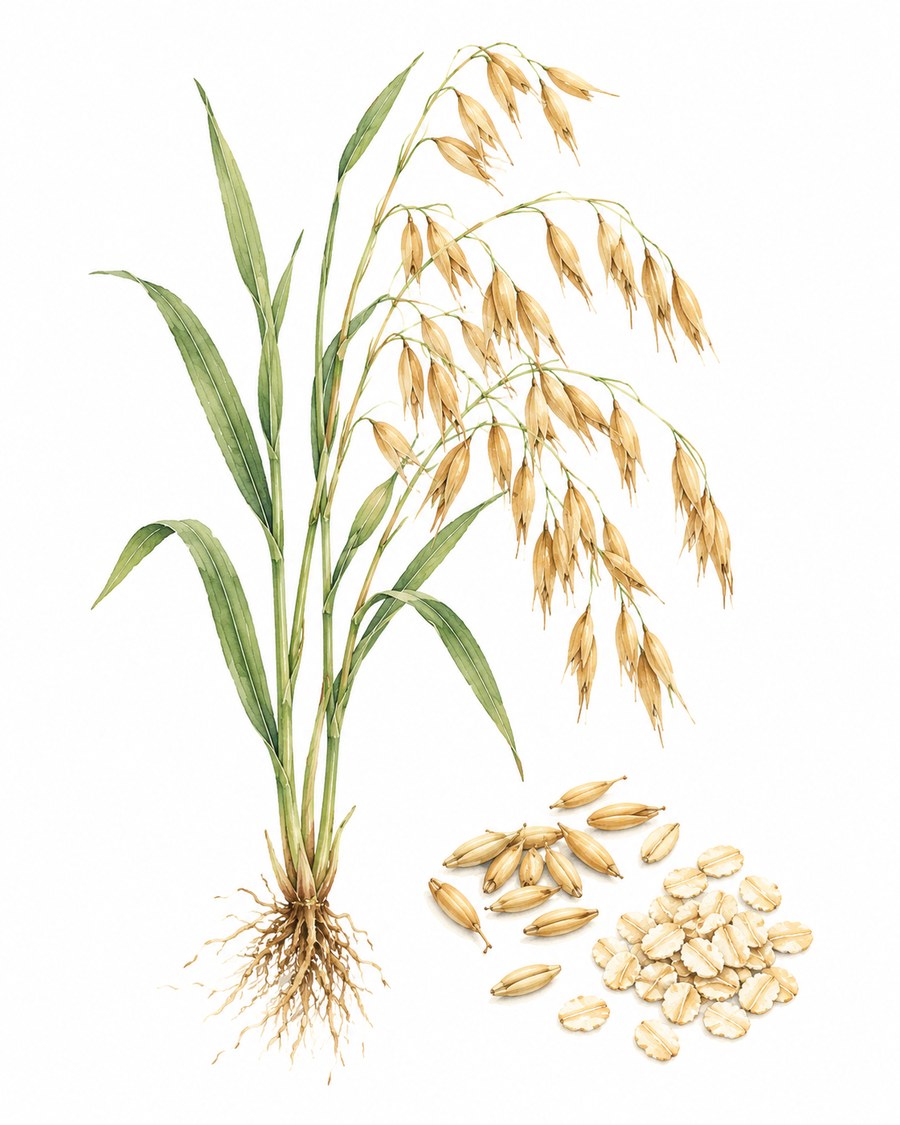
Oats are a rich source of beta-glucan, a viscous, soluble fibre recognised for its cholesterol-lowering properties (Ho et al., 2016). Because it is a fibre, human enzymes cannot digest it, so it carries on through the gut to the colon, where the resident microbes can ferment it. You can follow that journey in One meal, one axis.
What the evidence tells us
Well supported
Oat beta-glucan lowers LDL cholesterol. A meta-analysis of 58 randomised controlled trials with 3,974 participants found that a median dose of 3.5 g of oat beta-glucan a day lowered LDL cholesterol by 0.19 mmol/l (95% CI −0.23 to −0.14), with similar falls in non-HDL cholesterol and apolipoprotein B, compared with control diets (Ho et al., 2016). The effect is modest and consistent in direction, although the size of the effect varied considerably between trials for reasons the authors could not explain.
Promising
Effects on inflammation and the gut microbiota, in some groups. A systematic review of randomised trials of oats and barley found that five of nine studies measuring inflammatory markers reported significant reductions, mainly in longer studies of people at metabolic risk, such as those with high cholesterol. No anti-inflammatory benefit was seen in healthy people. Thirteen studies measured the gut microbiota and together suggest that oat and barley foods can change its composition, in some cases alongside metabolic improvements (Cortijo-Alfonso et al., 2024). The authors caution that the small number of trials, and differences in doses, products and participants, mean these conclusions should be interpreted with caution.
Plausible pathway
A route from oats to the gut-immune-brain axis. Oat fibre reaches the colon, can alter the microbial community there, and in people at metabolic risk may lower markers of inflammation (Cortijo-Alfonso et al., 2024). Each of those steps sits on the pathway that links diet to the brain, but none of the studies here measured cognitive outcomes, so any benefit for the ageing brain remains untested.
References
Asnicar, F., Berry, S. E., Valdes, A. M., Nguyen, L. H., Piccinno, G., Drew, D. A., Leeming, E., Gibson, R., Le Roy, C., Francis, L., Mazidi, M., Mompeo, O., Valles-Colomer, M., Tett, A., Beghini, F., Dubois, L., Bazzani, D., Thomas, A. M., Mirzayi, C., … Segata, N. (2021). Microbiome connections with host metabolism and habitual diet from 1,098 deeply phenotyped individuals. Nature Medicine, 27(2), 321–332. https://doi.org/10.1038/s41591-020-01183-8
Cortijo-Alfonso, M.-E., Romero, M.-P., Macià, A., Yuste, S., Moralejo, M., Rubió-Piqué, L., & Piñol-Felis, C. (2024). Effect of barley and oat consumption on immune system, inflammation and gut microbiota: A systematic review of randomized controlled trials. Current Nutrition Reports, 13(3). https://doi.org/10.1007/s13668-024-00543-x
Ho, H. V., Sievenpiper, J. L., Zurbau, A., Blanco Mejia, S., Jovanovski, E., Au-Yeung, F., Jenkins, A. L., & Vuksan, V. (2016). The effect of oat β-glucan on LDL-cholesterol, non-HDL-cholesterol and apoB for CVD risk reduction: A systematic review and meta-analysis of randomised-controlled trials. British Journal of Nutrition, 116(8), 1369–1382. https://doi.org/10.1017/S000711451600341X