What is in it
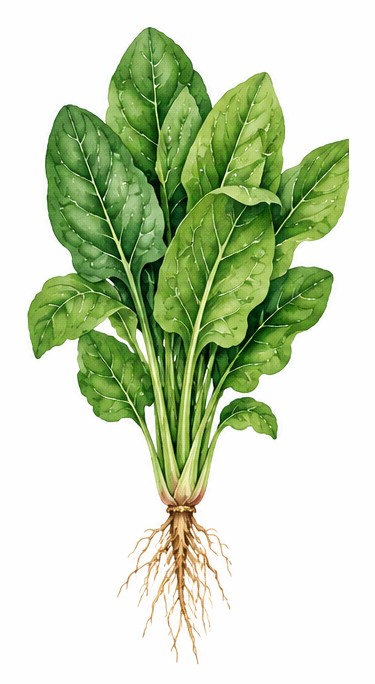
Spinach, like lettuce and beetroot, is rich in inorganic nitrate (Chai et al., 2024). A single serving of spinach, lettuce or beetroot contains more nitrate than all three of the body’s nitric oxide-producing enzymes generate in a day (Lundberg et al., 2009). Nitric oxide helps regulate blood flow and blood pressure, and the body can make it from dietary nitrate as well as through its own enzymes.
That dietary route runs through the mouth. The salivary glands concentrate nitrate from the blood into saliva, bacteria in the mouth convert it to nitrite, and swallowed nitrite is then turned into nitric oxide in the stomach, blood and tissues (Lundberg et al., 2009). The NO-Boost Smoothie explains the pathway in more detail.
Green leafy vegetables such as spinach are also rich in lutein, folate, vitamin K (phylloquinone), α-tocopherol, β-carotene and the flavonoid kaempferol (Morris et al., 2018).
Spinach is also high in oxalates, one of the so-called anti-nutrients. I look at what the evidence says about them in Much Ado About Anti-Nutrients.
Nutrients at a glance
These values come from the UK’s official food composition tables (Public Health England, 2021) and are given per 100 g of the edible leaf. They are averages of sampled spinach, so any given bag will differ with variety, season, growing conditions and storage, and how much of a nutrient a food contains is not the same as how much your body absorbs. The tables do not include nitrate.
n/a: not analysed in the dataset for this form of spinach.
Reading the columns. The baby spinach values come from a 2013 UK analysis of 16 samples. The mature spinach values come mainly from a UK retail survey carried out in 1984 to 1987, with ribs and stems removed. Because the samples were taken decades apart, the gap between baby and mature spinach reflects differences in sampling as well as leaf age. The raw and boiled mature spinach values come from the same survey, so comparing those two columns is the fairer way to see what cooking changes. Water-soluble nutrients such as vitamin C, folate and potassium fall substantially after boiling. Carotene and vitamin K1 appear higher in the boiled column, but those values were added later from separate analyses, so that difference should be read with caution.
*Calcium. Spinach is high in oxalic acid, which binds calcium, and calcium absorption from a food falls as its oxalic acid content rises. Low-oxalate greens such as kale, broccoli and bok choy, along with calcium-set tofu, are much better sources of calcium the body can absorb (Weaver et al., 1999), so enjoy spinach for its other nutrients and look to those foods for calcium.
Polyphenols
Spinach’s polyphenols are mainly flavonols. The Phenol-Explorer database lists nine in raw spinach, measured by chromatography (Neveu et al., 2010; Phenol-Explorer, n.d.). Seven of the nine are glycosides of patuletin, spinacetin or jaceidin, meaning the flavonol carries an attached sugar. Grouped by parent compound, the mean values are:
Show all nine compounds
All values in mg per 100 g fresh weight. Each value is based on 28 to 30 samples from two published studies.
Reading these figures. The combined figure adds up the mean values for each compound, so treat it as a guide rather than a measured total. The ranges are wide; one compound varies from about 7 mg to over 113 mg per 100 g between samples, and all nine values come from just two studies. These are amounts in the leaf, not amounts absorbed.
What the evidence tells us
Well supported
Dietary nitrate is converted to nitric oxide, and bacteria in the mouth are essential to the first step. In healthy volunteers, a nitrate-rich drink lowered blood pressure by around 10 mmHg, and the effect disappeared when volunteers spat out their saliva instead of swallowing it (Lundberg et al., 2009). When healthy adults used an antiseptic mouthwash for a week, nitrite production in the mouth fell by 90%, nitrite in the blood fell by 25%, and blood pressure rose by 2 to 3.5 mmHg (Kapil et al., 2013).
Promising
Nitrate may reshape the oral microbiome. In older adults, ten days of dietary nitrate shifted the balance of oral bacteria and reduced a cluster associated with pro-inflammatory metabolism (Vanhatalo et al., 2021), and nitrate-reducing bacteria such as Rothia and Neisseria become more abundant after nitrate supplementation (Chai et al., 2024). These findings come from small, short studies.
Leafy greens and cognitive decline. In the Rush Memory and Aging Project, 960 adults aged 58 to 99 were followed for an average of 4.7 years. Those eating the most green leafy vegetables, a median of about 1.3 servings a day, showed slower cognitive decline, equivalent to being 11 years younger. Higher intakes of nitrate, lutein, folate, vitamin K, α-tocopherol and kaempferol were each associated with slower decline (Morris et al., 2018). This is an observational study, so confounding cannot be ruled out, and the findings may not apply to younger adults or to more diverse populations, as the participants were almost all white.
Plausible pathway
A route to healthier ageing. The body’s own enzyme route to nitric oxide becomes less effective with age and illness (Chai et al., 2024), and reduced nitric oxide production in later life is linked with poorer cardiovascular and cognitive function (Vanhatalo et al., 2021). A nitrate-rich vegetable such as spinach could help compensate. The association between nitrate intake and slower cognitive decline in the Rush cohort fits this idea (Morris et al., 2018), but it has not been tested in long-term trials of cognitive outcomes.
What we do not know
Most nitrate studies used beetroot juice or nitrate supplements rather than spinach, and none of the studies here compared baby spinach with mature leaves. We do not know how the nitrate in a handful of spinach compares with the doses used in those trials.
References
Asnicar, F., Berry, S. E., Valdes, A. M., Nguyen, L. H., Piccinno, G., Drew, D. A., Leeming, E., Gibson, R., Le Roy, C., Francis, L., Mazidi, M., Mompeo, O., Valles-Colomer, M., Tett, A., Beghini, F., Dubois, L., Bazzani, D., Thomas, A. M., Mirzayi, C., … Segata, N. (2021). Microbiome connections with host metabolism and habitual diet from 1,098 deeply phenotyped individuals. Nature Medicine, 27(2), 321–332. https://doi.org/10.1038/s41591-020-01183-8
Chai, X., Liu, L., & Chen, F. (2024). Oral nitrate-reducing bacteria as potential probiotics for blood pressure homeostasis. Frontiers in Cardiovascular Medicine, 11, Article 1337281. https://doi.org/10.3389/fcvm.2024.1337281
Kapil, V., Haydar, S. M. A., Pearl, V., Lundberg, J. O., Weitzberg, E., & Ahluwalia, A. (2013). Physiological role for nitrate-reducing oral bacteria in blood pressure control. Free Radical Biology and Medicine, 55, 93–100. https://doi.org/10.1016/j.freeradbiomed.2012.11.013
Lundberg, J. O., Gladwin, M. T., Ahluwalia, A., Benjamin, N., Bryan, N. S., Butler, A., Cabrales, P., Fago, A., Feelisch, M., Ford, P. C., Freeman, B. A., Frenneau, M., Friedman, J., Kelm, M., Kevil, C. G., Kim-Shapiro, D. B., Kozlov, A. V., Lancaster, J. R., Jr., Lefer, D. J., … Weitzberg, E. (2009). Nitrate and nitrite in biology, nutrition and therapeutics. Nature Chemical Biology, 5(12), 865–869. https://doi.org/10.1038/nchembio.260
Morris, M. C., Wang, Y., Barnes, L. L., Bennett, D. A., Dawson-Hughes, B., & Booth, S. L. (2018). Nutrients and bioactives in green leafy vegetables and cognitive decline: Prospective study. Neurology, 90(3), e214–e222. https://doi.org/10.1212/WNL.0000000000004815
Neveu, V., Perez-Jiménez, J., Vos, F., Crespy, V., du Chaffaut, L., Mennen, L., Knox, C., Eisner, R., Cruz, J., Wishart, D., & Scalbert, A. (2010). Phenol-Explorer: An online comprehensive database on polyphenol contents in foods. Database, 2010, Article bap024. https://doi.org/10.1093/database/bap024
Phenol-Explorer. (n.d.). Showing all polyphenols found in spinach, raw (Version 3.6) [Data set]. Retrieved September 30, 2026, from http://phenol-explorer.eu/contents/food/272
Public Health England. (2021). McCance and Widdowson’s composition of foods integrated dataset [Data set]. GOV.UK. https://www.gov.uk/government/publications/composition-of-foods-integrated-dataset-cofid
Vanhatalo, A., L’Heureux, J. E., Kelly, J., Blackwell, J. R., Wylie, L. J., Fulford, J., Winyard, P. G., Williams, D. W., van der Giezen, M., & Jones, A. M. (2021). Network analysis of nitrate-sensitive oral microbiome reveals interactions with cognitive function and cardiovascular health across dietary interventions. Redox Biology, 41, Article 101933. https://doi.org/10.1016/j.redox.2021.101933
Weaver, C. M., Proulx, W. R., & Heaney, R. (1999). Choices for achieving adequate dietary calcium with a vegetarian diet. The American Journal of Clinical Nutrition, 70(3, Suppl.), 543S–548S. https://doi.org/10.1093/ajcn/70.3.543s