The Leguminatis · PLNT-001 · Track 01

The Initiation

The Initiation illustration
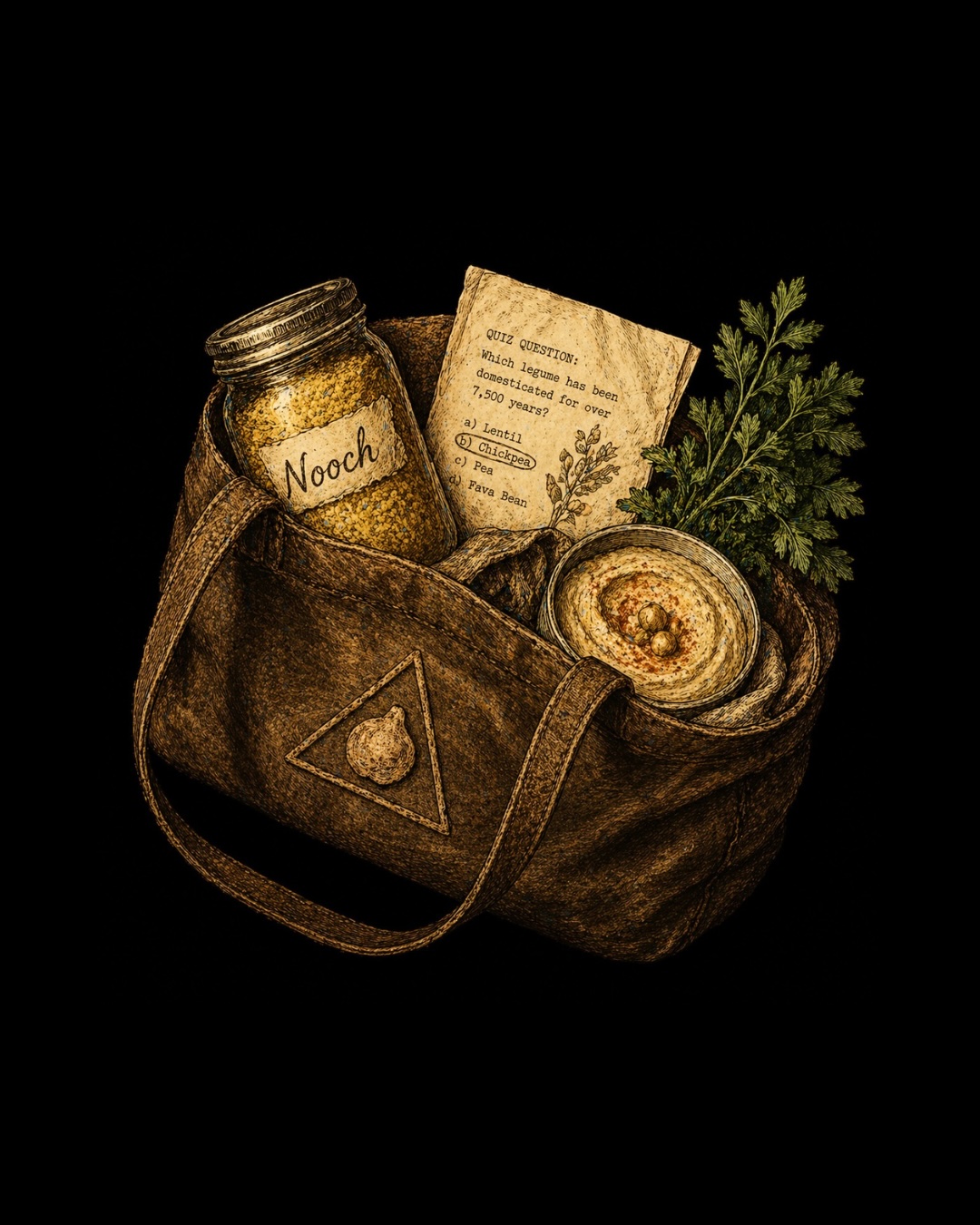
“There exists, in farmers’ markets and well-lit kitchen corners across the land, a secret society. They carry tote bags. They ask questions. They have opinions about beans and lentils that you didn’t ask for. They are… The Leguminatis.”

The science behind the song

"The Initiation" opens the album by introducing the society and its rituals: quiz nights every second Monday, a group chat that nobody ever leaves, a three-hour investigation into nutritional yeast (they call it nooch), and a standing debate about whether oats are really gluten free. It's warm, conspiratorial, and slightly self-righteous, which is, by the song's own admission, the whole point.

Underneath the comedy, the song touches on something nutritionally real. Nutritional yeast earns its place in the Leguminatis pantry for a practical reason: most fortified brands are a reliable source of vitamin B12, a nutrient that isn't reliably present in plant foods and one that people following a whole-food plant-based diet need to source from fortified foods or a supplement. The hummus, meanwhile, is built on one of the oldest domesticated crops in human agriculture: chickpeas, cultivated for more than 7,500 years, first grown in the Fertile Crescent, and valued for their protein, fibre, and ability to store well across seasons.

The closing line, "we were here before the oat milk," is funnier if you know that legumes were among the earliest cultivated food crops, predating the current wave of plant-based products by several thousand years.

Key terms

Vitamin B12 (cobalamin). An essential vitamin involved in nerve function, red blood cell formation, and DNA synthesis. B12 is often described as an "animal-food nutrient," but biologically it is microbial. It is produced by microorganisms in soil, not by plants or animals themselves. Animals obtain or accumulate it through microbial activity, feed, or supplementation. Due to modern agricultural practices and soil depletion, B12 is no longer found reliably even in animal-derived foods without intervention: ruminants such as cows and sheep are often given cobalt (which gut microbes use to synthesise B12) in their feed, and pigs and poultry routinely receive B12-fortified feed. In plant-based diets, the practical solution is simpler and more direct: use fortified foods and drinks, such as nutritional yeast, non-dairy drinks, and breakfast cereals, or take a regular B12 supplement. Deficiency can develop gradually and affect neurological function.

Fortification. The process of adding nutrients to a food product that would not naturally contain them, or not in sufficient quantities. Nutritional yeast, for example, is often fortified with B vitamins including B12, making it a practical dietary source for people who do not eat animal products.

The Initiation Quiz

Every Leguminatis member completes the quiz. Ten questions, drawn from across the album. Get them all right and consider yourself fully initiated.

Question 1 of 10

Which legume has been domesticated for over 7,500 years?

Chickpeas were first cultivated in the Fertile Crescent and have been a staple food for thousands of years. They're the foundation of hummus, the official dip of The Leguminatis. Read more on the Bean There page →
Question 2 of 10

What do The Leguminatis call nutritional yeast?

Nooch. It's a fortified source of vitamin B12, which is produced by soil microorganisms and is no longer reliably present in food, including animal products, without supplementation or fortification.
Question 3 of 10

Are oats really gluten free?

Oats do not naturally contain gluten, but they are frequently processed in facilities that also handle wheat, barley, and rye, which means cross-contamination is common. People with coeliac disease need oats specifically certified as gluten free.
Question 4 of 10

When gut bacteria ferment the fibre in beans, what do they produce?

Short-chain fatty acids (SCFAs) are small molecules produced when gut bacteria ferment dietary fibre in the colon. Butyrate is the primary fuel source for the cells lining the colon and is one of the better-studied links between diet and the gut-brain axis. Read more on the Seed That page →
Question 5 of 10

Sulforaphane, found in broccoli, activates which cellular pathway?

The Nrf2 pathway (nuclear factor erythroid 2-related factor 2) regulates the body's antioxidant and detoxification response. Sulforaphane, produced from glucosinolates when broccoli is chewed or chopped, is one of its most potent known dietary activators. Read more on the Broccoli Ritual page →
Question 6 of 10

What are water kefir grains actually made of?

Water kefir grains are a symbiotic culture of bacteria and yeast held together in a gel-like polysaccharide matrix. They convert sugar water into a lightly fizzy, probiotic drink through fermentation. They are not actually grains. Read more on the Water Kefir page →
Question 7 of 10

Which rescue did our Yorkshire Terrier, Beau, come from?

Beau was rescued via the RSPCA. He took the sofa on the first night and never gave it back. He is a credited artist on this album. Read more on the Every Life page →
Question 8 of 10

What compound in matcha promotes calm, focused alertness alongside caffeine?

L-theanine is an amino acid found almost exclusively in the tea plant. It crosses the blood-brain barrier and promotes alpha brain wave activity, a pattern linked to relaxed alertness. When consumed alongside caffeine, as it naturally occurs in matcha, it may smooth out the stimulant effect into a calmer form of focus. Read more on the Tea on My Jumper page →
Question 9 of 10

Why should you soak dried beans before cooking them?

Soaking leaches out raffinose-family oligosaccharides, the short-chain sugars that gut bacteria ferment to produce gas. It also reduces phytic acid, which can bind minerals and reduce absorption, and shortens cooking time considerably. They always need soaking. Read more on the Bean There page →
Question 10 of 10

What nutrient found in cauliflower is used by the body to make acetylcholine, a neurotransmitter involved in memory and learning?

Choline is an essential nutrient used by the body to build cell membranes, move fats around the body, and make acetylcholine. Plant-based sources include cauliflower, soybeans, quinoa, broccoli, and Brussels sprouts. Read more on the Bang Bang Cauliflower page →